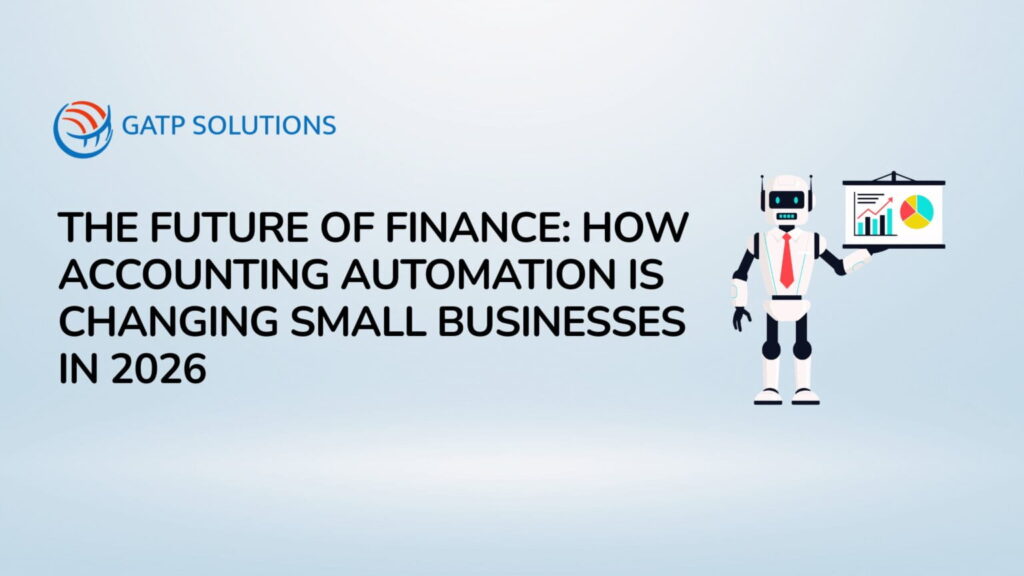
Maria used to spend fifteen hours a month manually reconciling invoices for her boutique. It was a cycle of “messy books,” delayed reports, and the constant fear of a surprise cash flow gap. This month? Her AI-driven system did it in 90 seconds. The landscape of small business finance hasn’t just shifted, it’s been rebuilt. In 2026, accounting automation is no longer a luxury for tech startups; it is the survival kit for every local shop and service provider. By leveraging AI accounting for small businesses, entrepreneurs are finally moving away from the grind of spreadsheets to focus on what actually matters: growth.
The Power of Accounting Automation
The primary goal of accounting automation is to eliminate the blind spots between your daily operations and your financial decision-making. Traditional tools recorded history; modern systems predict your future.
Business owners now expect their software to categorize every transaction the moment it happens. This technology removes the lag time that used to plague planning sessions. Imagine a bakery owner seeing ingredient costs update automatically as digital invoices arrive, rather than discovering a margin squeeze three weeks later during a monthly check-in.
The transition is remarkably simple because most platforms now utilize Agentic AI—intelligent “agents” that route data between your bank, inventory, and tax filings without you ever hitting “export.”
Key Capabilities of Modern Accounting Automation
Traditional accounting tools record history. Modern accounting automation predicts the future. See how unified accounting platforms simplify financial operations:
- Enterprise-grade automation for daily bookkeeping tasks.
- Unified general ledgers that sync instantly with banks, payroll, and tax tools.
- Real-time financial reporting via interactive dashboards.
Learn more about “Free Accounting Software for Small Business.”
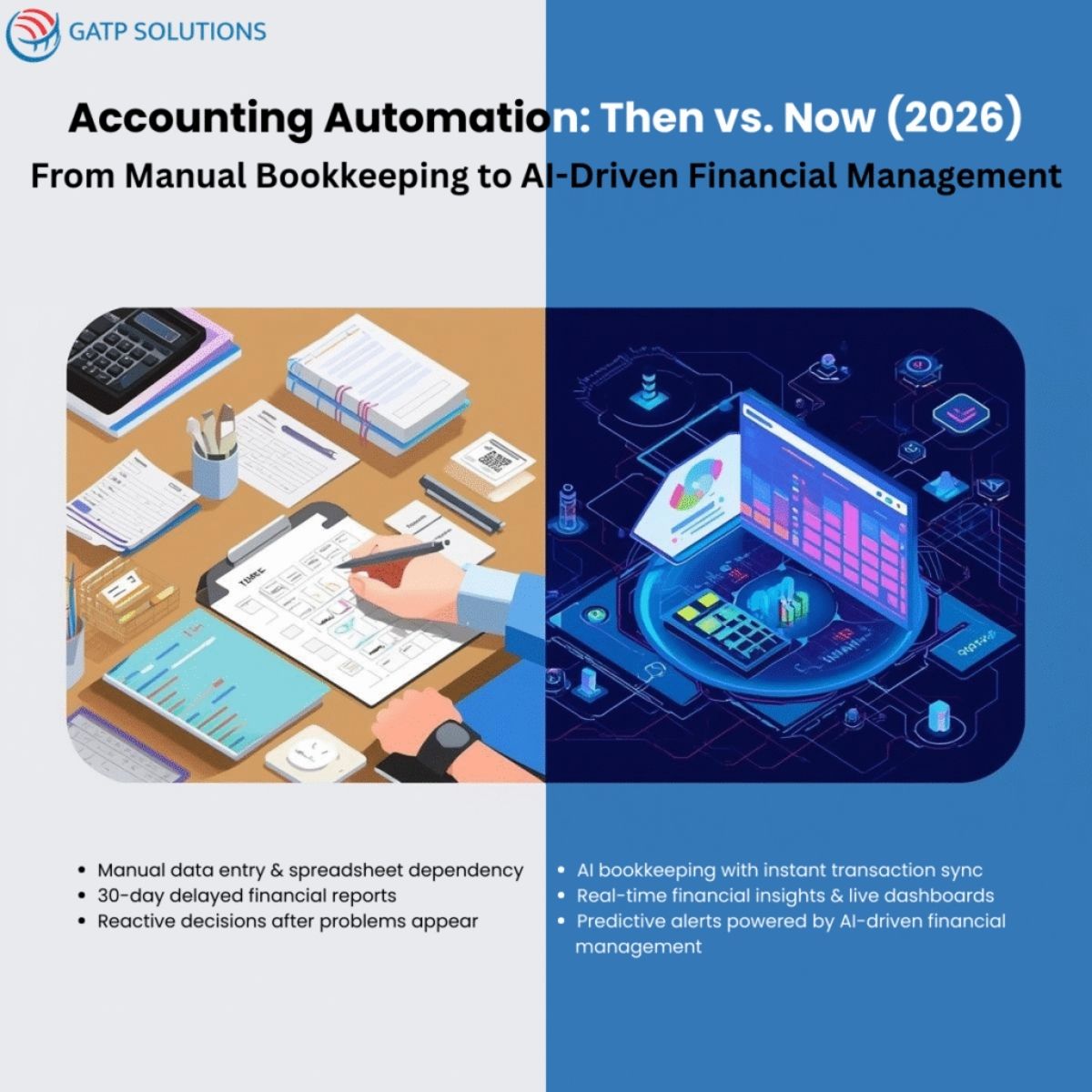
How AI Accounting Is Transforming Small Business Finance
The most significant change for small businesses in 2026 is the access to business intelligence reporting. Previously, only large corporations could afford deep data analysis. Now, AI bookkeeping tools provide small firms with the same level of insight. These systems do more than just record what happened in the past. They use anomaly detection to spot errors or potential fraud before they become major problems.
Benefits of High Tech Financial Oversight
Here’s how AI bookkeeping improves financial accuracy:
- Automated GAAP Compliance: The software updates itself as accounting standards change, keeping you legally protected.
- SOC 2 Type II Compliant Data Vault: Your financial data is stored in ultra secure digital environments that prevent cyber threats.
- Proactive Financial Monitoring: The AI alerts you if your cash flow is predicted to dip next month.
- Full Stack Workflow System: Every part of your business communicates through a central general ledger with deep integrations.
Check out our guide on “Outsourced Payroll Services & Accounting”.
Real-Time Financial Insights for Better Decisions
In 2026, “real-time visibility” means you no longer wait for month-end reports to know if you can afford a new hire. With AI-powered financial decision-making, leaders act with the confidence of hard data. This turns accounting from a chore into a strategic weapon.
What Business Intelligence Reporting Delivers
Modern reporting focuses on clarity, not complexity:
- Live performance dashboards (know your profit by lunch).
- Trend analysis for smarter seasonal planning.
- Actionable insights that prioritize what to do next, not just what happened yesterday.
Proactive Financial Monitoring and Compliance – Accounting Automation
Proactive financial monitoring AI helps small businesses spot issues early. Anomaly detection identifies unusual transactions, duplicate payments, or potential fraud before they become serious problems. At the same time, accounting automation ensures consistent GAAP compliance. Rules are applied automatically, reducing the risk of reporting errors and penalties.
Built In Risk and Compliance Controls
Learn how accounting automation compliance reduces financial risk:
- Continuous anomaly detection
- Standardized accounting practices
- Audit ready records at all times
Find out how compliance automation protects your business from our case study.
Security and Trust in the Digital Back Office
Security is the bedrock of AI-driven financial management. Modern platforms rely on SOC 2 Type II compliant data vaults. This ensures that sensitive financial data is protected by the same standards used by global banks. Small businesses report, on average, a 60% reduction in time spent on compliance-related tasks when switching to these secure, automated environments.
Why Strategic Consultation Still Matters
Automation delivers speed and accuracy, but strategic growth still requires interpretation, context, and human judgment. Technology handles the repetitive “how,” while experts provide the “why.”
This is where the hybrid model of AI-driven accounting and professional consultation shines. GATP Solutions stands out as a leader in this space, acting as the bridge between your high-speed software and your long-term growth strategy. They help owners interpret complex BI reports and ensure the AI’s rules align perfectly with specific industry needs.
The Role of Modern Accountants
- Interpreting complex projections with the help of GATP Solutions.
- Setting up initial automation rules for long-term success.
- Providing tax strategy based on AI-generated trend data.
Conclusion
The evolution of accounting automation in 2026 has finally leveled the playing field. By adopting AI bookkeeping, you gain the freedom to lead your company with confidence and the security of a SOC 2 compliant vault. Embracing these changes is the most effective way to ensure your business remains profitable in a digital-first economy.
Ready to eliminate surprises and unlock confident decision-making? Book a 15-minute walkthrough to see your financial data update in real-time.
FAQs: Accounting Automation and AI Accounting 2026
Q. What is accounting automation for small businesses?
It is the use of AI driven systems to handle bookkeeping, reporting, compliance, and insights automatically.
Q. How quickly can a small business implement accounting automation?
Most modern AI accounting systems can be deployed within weeks, with historical data migrated and workflows automated without disrupting operations.
Q. Is AI accounting suitable for small businesses in 2026?
Yes. AI accounting for small businesses is scalable, cost effective, and designed for real world operations.
Q. How does accounting automation improve decision making?
It provides real time financial reporting and business intelligence insights that support faster and better decisions.
Q. Is automated accounting secure?
Modern platforms use SOC 2 Type II compliant data vaults to protect sensitive financial information.
Q. Does accounting automation replace accountants?
No. The best systems combine AI technology with ongoing financial consultation from experts.