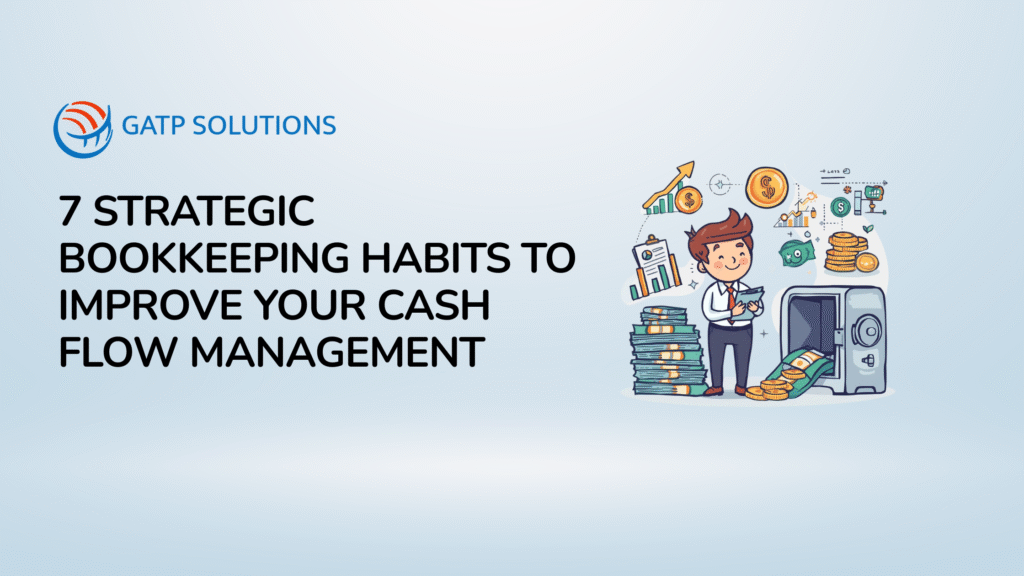
Imagine waking up to a notification that your main supplier’s payment bounced, yet your Shopify dashboard shows record sales. This “profitable but broken” paradox happens when a sudden inventory restock overlaps with delayed Stripe payouts. Perhaps you are a clinic owner struggling to match insurance reimbursements with rising payroll costs. Without accurate data, you are essentially flying a plane in thick fog without instruments. Poor financial tracking is not just an administrative headache. It is the leading cause of small business failure. Mastering cash flow management is the only way to ensure your vision survives the month.
The Essential Role of Professional Bookkeeping Services
Reliable bookkeeping services act as the foundation for every strategic business decision you make. When your records are messy, you cannot see where your money is leaking or where it is being put to its best use. Many entrepreneurs view accounting as a task for tax season, but it is actually a daily requirement for liquidity.
Professional oversight ensures that every dollar is accounted for and every trend is identified early. Here are the transformative habits that bridge the gap between surviving and thriving in cash flow management.
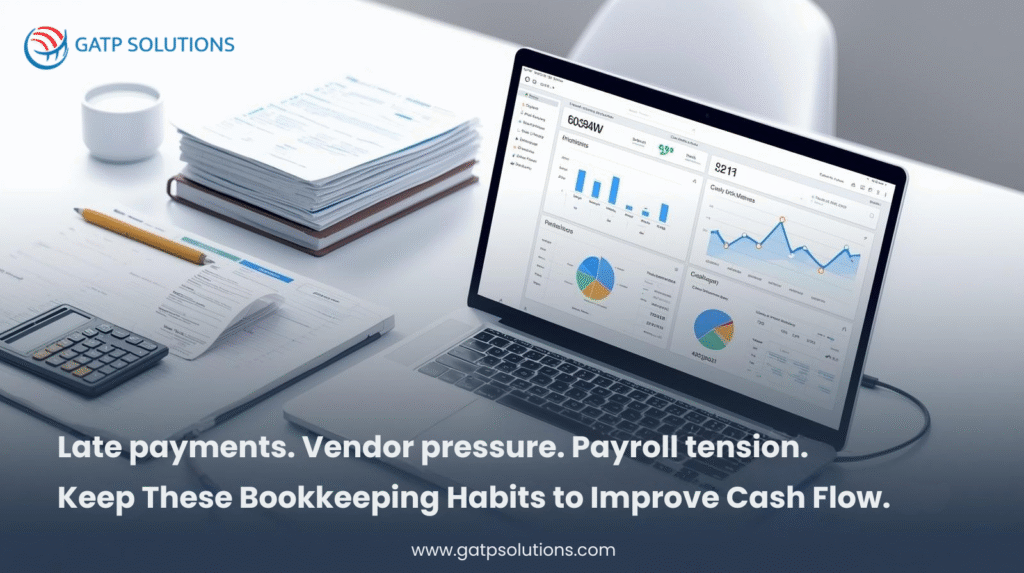
1. Reconcile Your Accounts Every Single Day for cash flow management
Daily reconciliation is the heartbeat of a healthy business. If you wait thirty days to match your bank statements to your books, you are thirty days behind on spotting fraud or bank errors. For an e-commerce brand, this means matching Shopify sales with Stripe payouts daily to account for processing fees.
In the real estate sector, this habit ensures that rent rolls match property expenses immediately. If a tenant misses a payment, you know on day two, not day thirty-two. This prevents small gaps from becoming giant holes in your budget.
Mistake to Avoid: Never assume your bank balance is your actual “spendable” cash, as it does not account for uncleared checks or pending debits.
Learn more about our book cleaning services with our automated tools.
2. Standardize Your Accounts Receivable Process
Cash flow dies in the “Accounts Receivable” column. If you provide a service today but do not get paid for sixty days, you are essentially acting as a bank for your clients. You need a rigorous system to ensure money moves from their pocket to yours as fast as possible.
Consider a medical clinic where insurance payments are often delayed. By mapping payroll compliance against incoming insurance claims, you can identify which providers are slow to pay. Establishing a habit of sending automated reminders three days before an invoice is due can reduce late payments by twenty percent.
Industry Example: A construction firm implemented “Progress Billing” where they invoiced every Friday for work completed that week. This habit increased their liquid cash by fifteen percent in one quarter.
Explore how our Virtual CFO services can optimize your billing
3. Separate Your Personal and Business Finances for cash flow management
Mixing funds is a common trap that complicates cash flow management and invites IRS scrutiny. When you pay for a personal dinner with a business card, you blur the lines of your true operational costs. This makes it impossible to calculate your actual profit margins.
Create a hard rule: one card for the business and one for yourself. This simple habit saves dozens of hours during year-end audits. It also allows AI-driven accounting tools to categorize your expenses with one hundred percent accuracy.
Checklist for Financial Separation:
- Open a dedicated business checking account.
- Obtain a business credit card for all overhead costs.
- Pay yourself a set salary rather than taking random draws.
- Use digital receipt scanning for every business-related purchase.
Discover our AI-driven Bookkeeping Solutions.
4. Implement a Weekly Cash Pulse Check
A weekly review is your early warning system. During this time, you should look at your total cash on hand, your upcoming bills for the next week, and your expected inflows. This prevents the “Friday Payroll Panic” that many founders face.
For example, a marketing agency might see a large software renewal coming up in two weeks. By spotting this during a weekly pulse check, they can choose to delay a non-essential equipment purchase to maintain their cushion. This habit turns reactive stress into proactive planning.
Case Study Snippet: A retail client was able to avoid a ten thousand dollar overdraft fee by identifying a double-billing error during their weekly review session.
Read more from our blog on “How to Clean Up Messy Books”.
5. Categorize Expenses with Precision
Generic labels like “Miscellaneous” are where financial clarity goes to die. If you do not know exactly what you are spending on marketing versus operations, you cannot cut costs effectively. High-quality bookkeeping services emphasize granular categorization.
In the real estate world, this means mapping expenses to specific properties. For a clinic, it means separating medical supplies from administrative office costs. When your data is clean, you can see which parts of your business are actually profitable.
Mistake to Avoid: Avoid using too many sub-categories. Keep your Chart of Accounts lean so you can actually read your Profit and Loss statement without getting a headache.
Get Financial Clarity Through AI-Driven Accounting.
6. Forecast Your Future Cash Needs
Looking at past spend is helpful, but forecasting is what saves businesses. A 13-week cash flow forecast is the gold standard for SMEs. It allows you to model different scenarios, such as what happens if a major client leaves or if you hire a new employee.
If you run a Shopify store, your forecast should include seasonal inventory spikes. By predicting that you need fifty thousand dollars for holiday stock in September, you can start setting aside cash in June. This removes the need for high-interest short-term loans.
Real-World Example: A startup used forecasting to prove they had six months of “runway” left, which gave them the confidence to negotiate a better deal with an investor.
Learn more from our blog about the most important Cash Flow Forecasting Tips.
7. Leverage Technology and Automation
Manual data entry is slow and prone to errors. Habitually using technology to automate your books ensures that your financial data is always current. Automation can handle everything from fetching bank statements to matching receipts to transactions.
By integrating your point-of-sale system directly with your accounting software, you eliminate the “human element” that causes discrepancies. This allows you to focus on strategy instead of data entry. Technology makes the other six habits on this list much easier to maintain.
Checklist for Automation:
- Connect bank feeds to your accounting software.
- Use automated bill pay for recurring utilities.
- Enable auto-reminders for all outgoing invoices.
- Sync your payroll provider with your general ledger.
Mistakes That Hurt Cash Flow
Even profitable companies struggle due to avoidable errors.
- Ignoring small recurring expenses
- Delaying bookkeeping updates
- Not reviewing financial statements regularly
- Failing to forecast seasonal demand
- Over relying on credit without tracking repayment cycles
Avoiding these mistakes strengthens long term liquidity. At GATP Solutions, our expert team helps identify these risks through detailed financial reviews.
Conclusion: Cash Flow Management
Consistent financial habits are the secret weapon of successful entrepreneurs. By prioritizing daily reconciliations and rigorous forecasting, you move from a state of financial chaos to one of total control for cash flow management. You no longer have to guess if you can afford that new hire or that office expansion. The data tells you the truth.
Ready to Optimize Your Finances?
We will review your current books and show you exactly what can be automated within the next 30 days. Stop letting manual tasks drain your energy. Let us provide the clarity you need to scale.
Reach out with GATP Solutions Today to Get Started.
Frequently Asked Questions – Cash Flow Management
Q. How often should I review my cash flow statements?
You should perform a brief check weekly and a deep-dive analysis monthly. The weekly check prevents immediate crises, while the monthly review helps with long-term strategy and cash flow management.
Q. Why are professional bookkeeping services better than doing it myself?
Professional services provide a layer of objectivity and expertise that prevents costly errors. They also stay updated on tax laws and use advanced tools that can save you hours of manual labor every week.
Q. What is the most common bookkeeping mistake that hurts cash flow?
The most common mistake is failing to follow up on overdue invoices. Many business owners feel awkward asking for money, but delayed payments are the primary reason for business insolvency.
Q. Can AI really handle my bookkeeping?
AI is excellent for categorization and data entry, but it still requires human oversight from an expert to ensure the context of the transactions is correct. A hybrid approach of AI and professional expertise is the most effective.