Imagine it is 2:00 AM on a Tuesday. You are staring at a chaotic spreadsheet of Shopify payouts that do not match your Stripe deposits. You have three missing invoices from a property renovation and a looming tax deadline. This manual data entry nightmare is a reality for many business owners who still run their small business bookkeeping on traditional methods. It leads to burnout, expensive late fees, and missed tax deductions. These small errors compound into big financial losses. Integrating AI in bookkeeping is no longer a choice but a necessity for survival.
Why AI in Bookkeeping is the Ultimate Growth Lever for Your Business
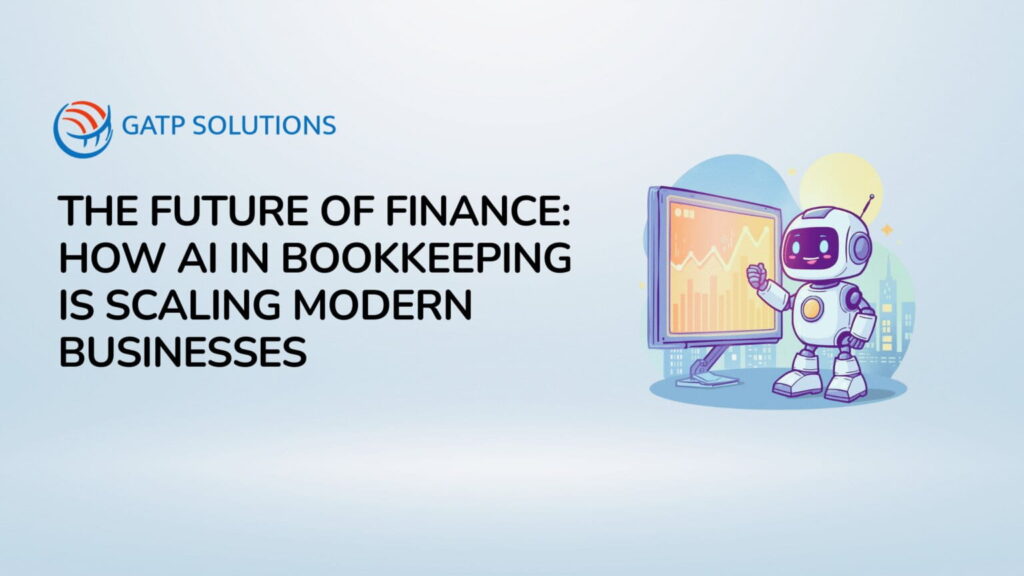
The shift toward AI in bookkeeping has fundamentally changed how we handle financial records in 2026. Instead of waiting thirty days for a monthly report, business owners now see their cash flow in real time. This technology allows for the instant categorization of expenses and the automatic syncing of bank feeds. It eliminates the tedious task of typing numbers into a ledger.
This transformation is not just about speed. It is about the accuracy that comes with machine learning in accounting, paired with a human review layer on top. That pairing is what modern outsourced bookkeeping actually looks like in 2026.
Real-World Industry Examples of Automation
- E-commerce: A seller on Shopify uses AI to reconcile Stripe payouts with inventory costs. The system automatically accounts for platform fees and shipping labels without any manual input.
- Real Estate: Property managers use AI for rent roll and property expenses mapping. The software recognizes utility bills for specific units and allocates them to the correct cost center.
- Medical Clinics: AI handles insurance payments and payroll compliance. It cross references patient co-pays with doctor commissions to ensure every staff member is paid correctly.
All three come down to the same underlying job: matching what you recorded against what actually moved. That is the payment reconciliation process, and AI now handles most of it.
How to Automate Manual Data Entry in Bookkeeping for Better Accuracy
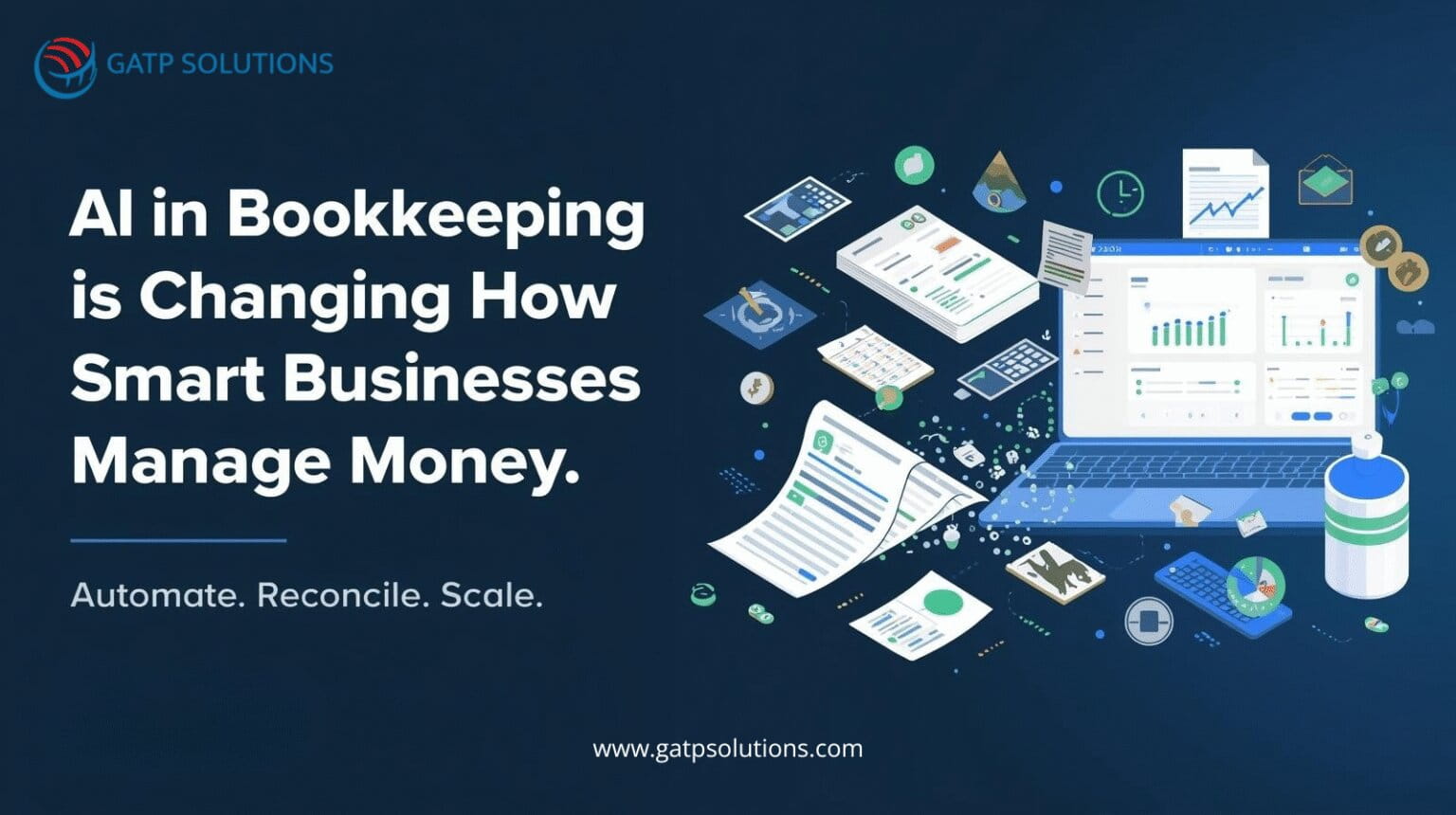
The biggest drain on a company’s resources is manual data entry. Human error is inevitable when you process hundreds of invoices every week. By using automated financial reporting, you can capture data from a photo or a PDF instantly. This ensures that your books are always current and ready for an audit. If a statutory audit is on the calendar, that readiness is the difference between a week of scrambling and an afternoon of exports. Transitioning to an automated system requires a clear strategy and the right tools.
A Checklist for Successful Automation
- Select Your Core Software: Choose a cloud-based platform like QuickBooks or Xero. Leaner teams often land on Wave or FreshBooks instead.
- Connect Your Bank Feeds: Ensure all business accounts are linked for daily syncing.
- Integrate Third Party Apps: Use tools like Hubdoc or Dext to fetch digital receipts.
- Set Up Categorization Rules: Teach the AI to recognize recurring vendors.
- Audit the Output: Have a professional review the AI classifications every month.
Benefits of AI in Bookkeeping for Small Business Owners
AI in Bookkeeping delivers measurable benefits beyond time savings. It improves accuracy, strengthens compliance, and enhances decision making. Small businesses especially benefit because they often operate with limited finance teams.
Let us look at the key advantages. Discover how structured small business bookkeeping supports sustainable growth.
1. Reduced Human Error
Manual spreadsheets increase risk. AI flags duplicate entries, missing invoices, and abnormal transactions. This prevents costly reporting mistakes.
2. Faster Financial Reporting
Monthly reports that once took two weeks can now be generated within days. Business owners access updated profit and loss statements anytime.
3. Better Cash Flow Forecasting
AI systems analyze historical spending and revenue patterns. They predict upcoming cash gaps. This helps businesses plan vendor payments and payroll in advance.
A multi specialty clinic handling insurance payments often faces delayed reimbursements. AI tools track receivables and highlight pending claims. Payroll compliance becomes easier with automated expense tracking. This level of clarity becomes powerful when combined with virtual bookkeeping support.
Case Study Snippet: A Growth Story
A mid-sized retail client came to GATP Solutions with two years of messy books. They were spending fifteen hours a week on manual entries. We implemented an AI-driven workflow that reduced their data entry time to thirty minutes. This allowed the owner to focus on opening a second location. Within six months, their revenue increased by 25 percent because they finally understood their profit margins. We ran the same playbook for a client who cut close time by 65 percent.
Common Mistakes Businesses Make When Implementing AI in Bookkeeping
While AI in Bookkeeping offers major benefits, incorrect implementation creates new risks. Businesses must avoid these common errors.
Before adopting tools, evaluate your current bookkeeping automation services framework.
Mistake 1: Relying Only on Software
AI tools require human oversight. Financial review by experienced professionals ensures compliance and strategic alignment.
Mistake 2: Poor Data Migration
Incorrect historical data upload leads to flawed reporting. Clean up books before automation. If your history still lives in a manual cash book, fix the format before you import it, because AI will happily learn your bad structure.
Mistake 3: Ignoring Internal Controls
Automation should strengthen approval workflows, not bypass them. Access rights and review systems remain critical. Automation also does not change what you are legally required to keep the IRS recordkeeping rules still apply, and you still have to produce the underlying documents on request.
Checklist: Is Your Business Ready for AI in Bookkeeping
Pair this with the right bookkeeping software for small business before you commit to a workflow.
- Are your current books updated monthly
- Do you reconcile bank accounts consistently
- Are you spending more than ten hours weekly on manual entries
- Do you lack real time financial reports
- Are you planning to scale operations within twelve months
If you answered yes to three or more, automation can significantly improve performance.
The Future of AI in Bookkeeping
AI in Bookkeeping will continue evolving. Predictive analytics, fraud detection, and automated compliance monitoring will become standard. However, human expertise will remain essential. Technology handles repetitive tasks. Financial professionals interpret insights and guide strategy. Businesses that combine automation with advisory support will outperform competitors in speed and accuracy.
Explore scalable financial systems through advanced outsourced accounting services.
Conclusion – AI in Bookkeeping
AI in Bookkeeping is not about replacing accountants. It is about eliminating inefficiencies. It helps businesses reduce errors, speed up reporting, and make confident decisions. From Shopify reconciliation to clinic payroll tracking, automation delivers real value.
If your books feel reactive instead of strategic, it is time to upgrade.
We will review your current books and show what can be automated in thirty days. Let us build a smarter financial system for your business.
Click here to schedule your consultation with GATP Solutions.
Frequently Asked Questions – AI in Bookkeeping
Q. Is AI in bookkeeping secure for my sensitive data?
Yes, most AI-driven platforms use bank-level encryption. When you partner with a professional firm like GATP Solutions, we add an extra layer of security and privacy protocols.
Q. Will automation replace my need for an accountant?
No, it changes the role of the accountant. Instead of entering data, your accountant becomes a strategic advisor who uses AI data to help you save money and grow.
Q. How long does it take to implement automation in accounting?
Most businesses can see a significant reduction in manual work within the first thirty days of implementation.
Q. Can AI help with my past messy books?
Absolutely. We use cleanup bookkeeping services powered by AI to quickly sort through historical data and fix errors from previous years.