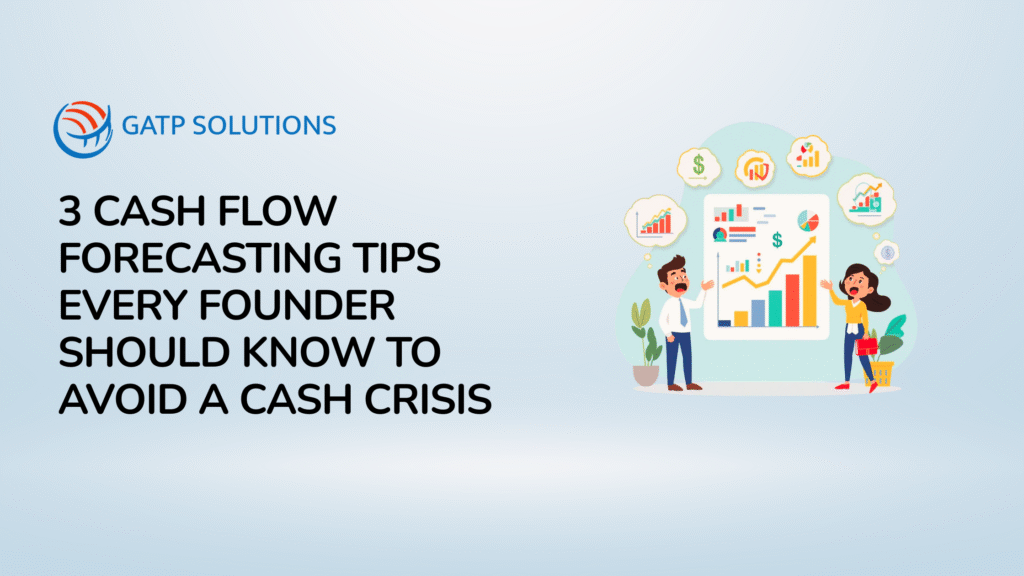
Imagine waking up to a notification that your latest product launch just cleared $100,000 in sales. You celebrate until you realize that your Shopify and Stripe payouts are delayed by five days. Meanwhile, your inventory bill for the next batch is due tomorrow, and payroll for your support team pulls from your account in forty-eight hours. You have the revenue, but you do not have the liquidity. This “growth trap” is a common pain point where paper profits mask a looming cash crisis. Effective cash flow forecasting is the only way to transform that stress into a scalable, predictable strategy.
What Is Cash Flow Forecasting and Why It Matters for Founders
Cash flow forecasting helps you estimate future cash inflows and outflows. It shows when money will enter your account and when it will leave. This is different from profit. A business can show profit on paper and still face a shortage of working capital.
Small business cash flow forecasting gives founders clarity. GATOP Solutions helps you prepare for tax payments, vendor dues, payroll cycles, and expansion costs. When done correctly, it reduces risk and improves decision making. When you understand the timing of every inflow and outflow, you gain the freedom to focus on innovation rather than debt.

3 Cash Flow Forecasting Tips Every Founder Should Know
Effective cash flow forecasting is not about complex spreadsheets. It is about consistency, accuracy, and review. Below are three practical and proven methods founders can apply immediately.
Use a Rolling Cash Flow Forecast Instead of Static Projections
Many founders create a yearly projection and forget it. Markets change quickly. Customer payments shift. Expenses increase without notice. A static forecast becomes outdated fast. A rolling cash flow forecast keeps your numbers current and realistic.
Here is how to implement it effectively:
- Update projections every month
- Always forecast at least the next twelve weeks
- Compare forecasted numbers with actual bank balances
- Adjust spending decisions based on real liquidity
Example:
An ecommerce founder using Shopify and Stripe noticed strong sales. However, Stripe payouts were delayed during a promotional campaign. A rolling forecast would have shown the payout gap and allowed adjustment in ad spending before cash pressure built up.
Base Your Cash Flow Projections on Real Data Not Assumptions
Assumptions create risk. Data creates control. Many founders expect clients to pay within thirty days. In reality, payments may take forty five days or more. Even small timing gaps can affect payroll and tax payments.
To build reliable cash flow projections:
- Review at least twelve months of historical bank data
- Track actual customer payment timelines
- Identify seasonal expense spikes
- Include tax liabilities in every forecast
For example:
A real estate portfolio owner mapped rent roll data against property maintenance expenses. The analysis revealed that large repair costs occurred every quarter. Without this mapping, liquidity would have tightened unexpectedly.
Cash flow analysis and forecasting becomes stronger when based on real numbers, not optimism.
If your books are not clean, review our guide on cleaning messy books to improve forecasting accuracy.
Leverage Cash Flow Forecasting Software and Templates
Manual spreadsheets increase error risk. Missed formulas and incorrect assumptions distort financial visibility. A structured cash flow forecast template or reliable cash flow forecasting software improves accuracy and saves time.
Here is how founders can use tools effectively:
- Choose software that integrates with your accounting system
- Automate bank data imports
- Track inflows and outflows by category
- Generate monthly cash flow forecast reports
Even a well structured Excel cash flow forecast example works if updated consistently. The tool matters less than the discipline.
If you want help selecting tools or building a custom forecast system, explore our Virtual Chief Financial Officer Services.
Implementing Strategic Cash Flow Management for Long-Term Stability
Mastering cash flow management requires more than just looking at a dashboard once a month. It involves a deep understanding of your “Cash Conversion Cycle.” This is the time it takes for a dollar spent on inventory or labor to return to your pocket as profit. If this cycle is too long, even a successful business can fail. You must optimize your internal processes to ensure that cash moves through your business as quickly as possible.
Founders often overlook the “hidden” gaps in their billing cycles that drain liquidity over time.
To tighten your financial cycle, consider these specific tactical moves:
Optimization Strategies for Working Capital
- Incentivize Early Payments: Offer a small discount for clients who pay within ten days.
- Negotiate Vendor Terms: Ask for net-45 or net-60 terms to keep cash in your account longer.
- Automate Collections: Use AI tools to send polite, persistent reminders for overdue invoices.
By focusing on these details, you ensure that your startup cash flow remains positive even during lean months.
Check out our latest case study on how we optimized working capital for a high-growth tech firm.
Common Cash Flow Forecasting Mistakes Founders Must Avoid
Many founders repeat the same avoidable errors. Awareness reduces risk.
Here is a quick checklist:
- Ignoring tax liabilities in projections
- Overestimating customer payment speed
- Forgetting seasonal expense spikes
- Failing to update forecasts monthly
- Mixing personal and business cash flow
These mistakes weaken small business cash flow forecasting. They also increase dependency on emergency funding.
To prevent financial blind spots, review our Proactive Tax Planning Services.
Cash Flow Forecasting Checklist for Founders
Use this simple action plan:
- Review last twelve months of bank data
- Categorize fixed and variable expenses
- Map inflows by realistic payment cycles
- Build a rolling cash flow forecast
- Compare forecast versus actual monthly
- Adjust projections based on trends
This structured approach strengthens cash flow analysis and forecasting. It also supports better strategic planning.
For deeper insight, read our blog to see how data driven financial systems improve stability.
Conclusion: Turn Cash Flow Forecasting into a Growth Strategy
Cash flow forecasting is not just a defensive tool. It is a growth enabler. When you understand your liquidity position, you hire confidently, invest wisely, and plan expansion with clarity. Founders who treat forecasting as a monthly discipline outperform those who rely on instinct. Whether you use a cash flow forecast template or advanced software, consistency is the real advantage. Build a rolling forecast. Use real data. Review monthly. Stability follows structure.
If you want expert support in building accurate cash flow projections and reducing financial risk, get in touch with us for a 30-days cash flow forecasting plan today!
Frequently Asked Questions – Cash Flow Forecasting
Q. How often should I update my cash flow forecast?
You should review your forecast weekly and perform a deep dive monthly. This ensures you catch any discrepancies between your startup cash flow projections and actual bank activity before they become problems.
Q. What is the difference between profit and cash flow?
Profit is what remains after expenses are deducted from revenue on an income statement. Cash flow is the actual movement of money into and out of your bank account. You can be profitable but have negative cash flow if your customers have not paid their invoices yet.
Q. How does automated cash flow reporting help my business?
Automated reporting reduces human error and provides real-time updates. For businesses like Clinics or E-commerce brands, it allows for instant reconciliation of insurance payments or Stripe payouts, giving you a live view of your financial health.
Q. Is cash flow forecasting important for startups?
Yes. Financial planning for startups depends on accurate cash flow projections. Startups face unpredictable revenue cycles and must plan carefully to avoid funding gaps.
Q. Can a Virtual CFO help with tax planning?
Yes. A Virtual CFO for startups integrates tax strategy into your daily financial management. This helps you avoid massive year-end bills by calculating your 2026 Tax Exposure Projection as you earn, ensuring you always have the funds set aside.