
The owner: funding his own company, with three accounts that could catch the money
The client is a small, hands-on motorsport tools manufacturer. The owner runs it and also funds it when cash is tight. GATP keeps the books in QuickBooks Online and prepares the company’s S-corp return and the owner’s personal return.
When the company needs cash, the owner lends it from his personal savings account. When the company can, it pays him back. Mostly he does this to keep credit card balances down & avoid interest.
He came to us with one clear question, not a mess. Which account should these transfers go to? Sounds like a 2 minute answer. It was not, because the chart of accounts already had three candidates: Owner’s Loan, Loan to Shareholder and Repayment of Loan to Business. Similar names, three different meanings.
The stakes were simple. Book a loan as income or a repayment as an expense, and the P&L stops telling the truth. The company looks like it earned money it only borrowed, or spent money it only repaid.
The quick fix was to drop the transfers into whichever account looked closest. That would have quietly mixed new activity into an account that already carried a brought-forward balance and prior-year entries.
With GATP: three ledgers read before one transfer was booked

Figure 1. How the owner’s question was worked through, from the account review to how each transfer is booked.
We treated the one-line question as what it really was. A chart of accounts decision that either keeps the books clean for years or slowly muddies them.
So before recommending anything, we opened the chart of accounts and read the general ledger behind all three loan-related accounts.
Only one account was clean. Owner’s Loan was set up as a liability and had never been used. Zero balance, no prior activity.
The other two carried history. Loan to Shareholder is an asset account for a different arrangement, with a balance brought forward from earlier years. Repayment of Loan to Business already held a prior incoming wire, an opening-balance entry and repayments from earlier in the year.
Both were left exactly as they stand, so no history gets overwritten.
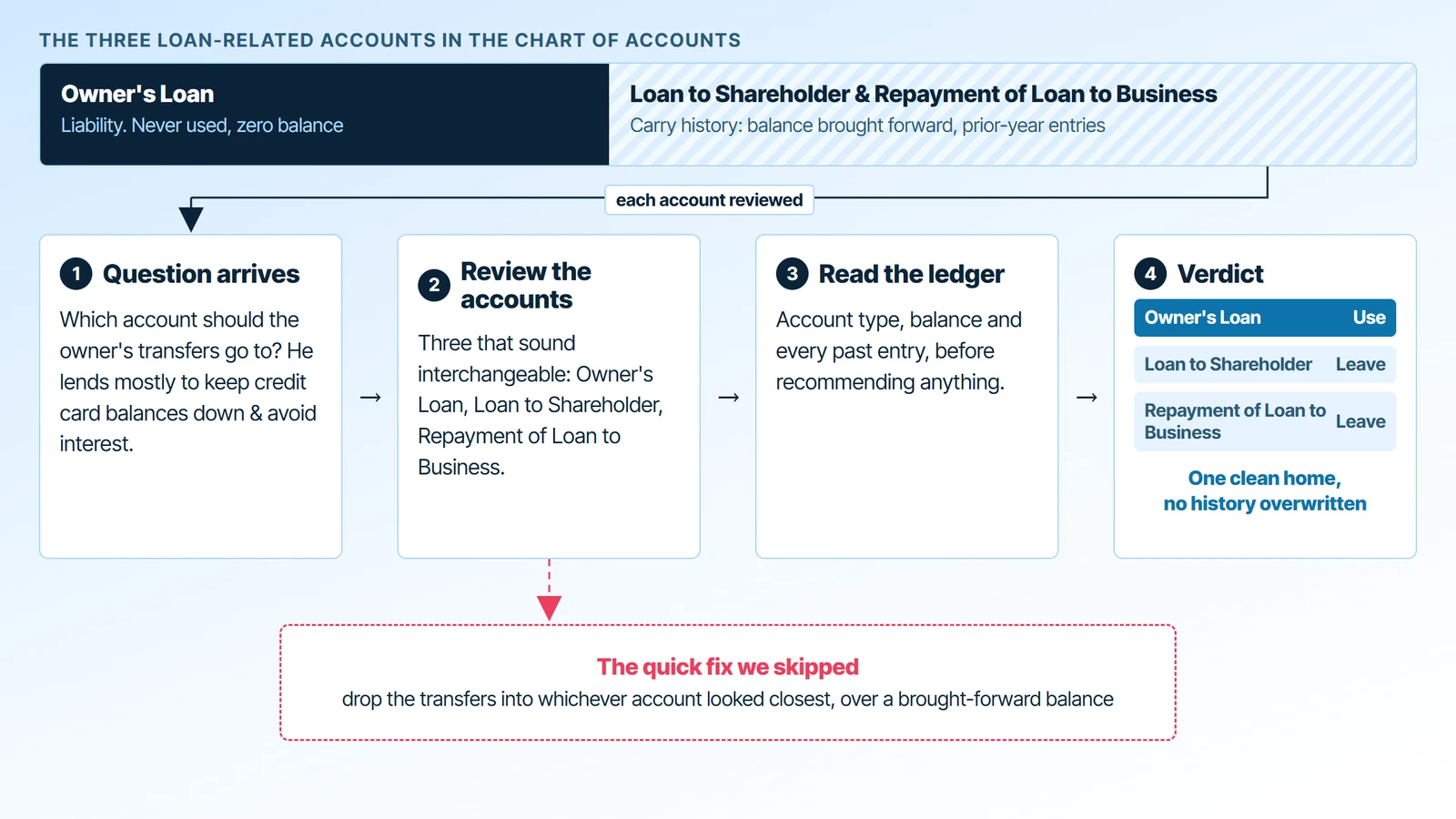
Figure 2. The three loan-related accounts, reviewed one by one before a single transfer was booked.
One rule for every transfer, kept away from the P&L
With the clean account confirmed, the rule took one line to set.
Money from the owner’s personal savings into the company is booked to Owner’s Loan as a loan to the company. Money moving back to the owner is booked to the same account as a repayment. Neither is ever income or expense.
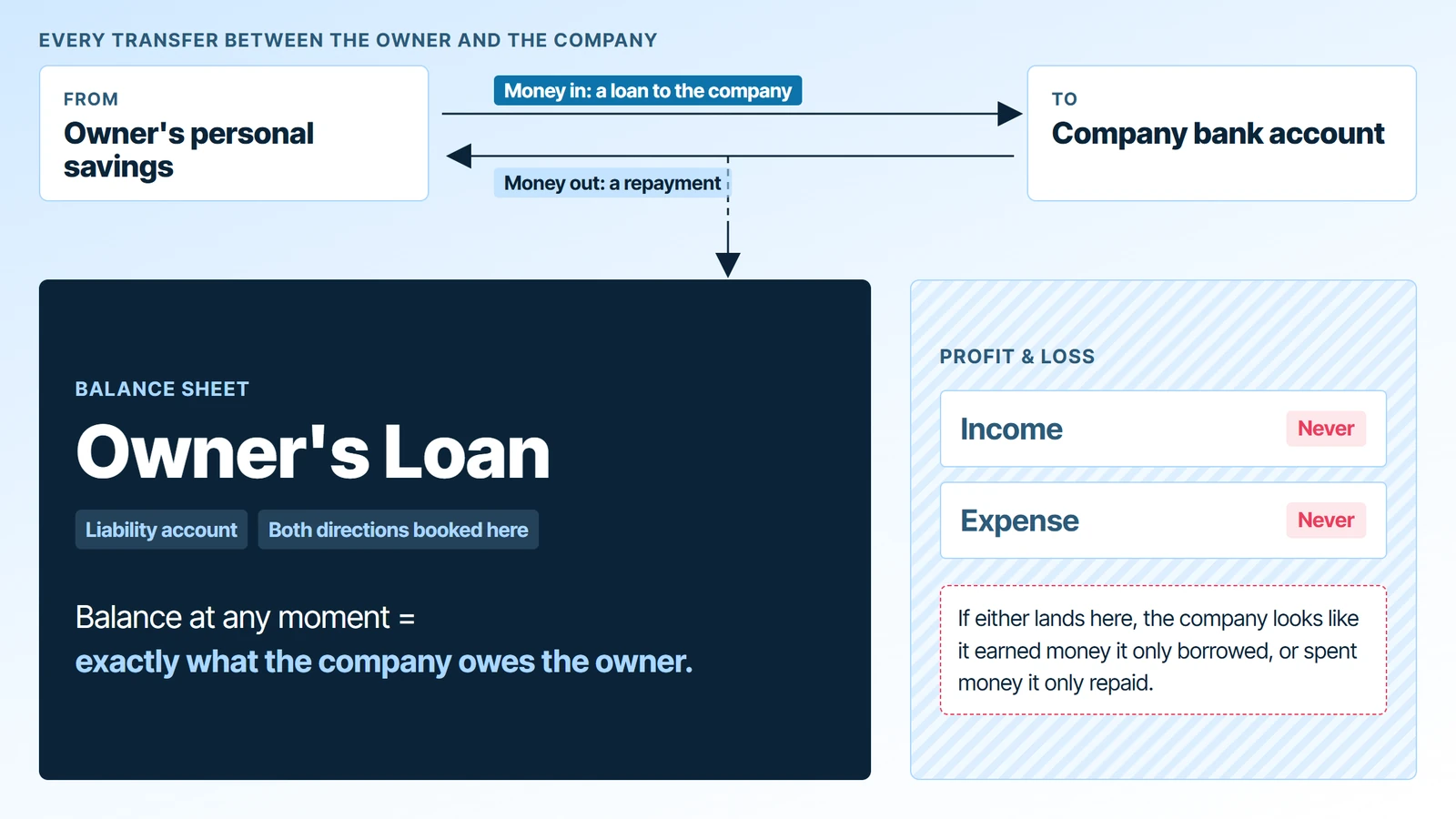
Figure 3. Every transfer between the owner and the company goes to one account, never to the P&L.
That gives the company a single point of control. At any moment, the Owner’s Loan balance shows exactly what the company owes the owner.
One clean account, with nothing from prior years disturbed
With one clean account and one rule, the owner’s lending now does exactly one job. The results are pretty clear:
- Every transfer in is a loan. Every transfer out is a repayment.
- None of it reaches income or expense, so profit shows the business and not the owner topping up the bank.
- The two accounts with real history were left untouched. Nothing from prior years was disturbed.
- The owner asked a plain question and got a plain answer. Use this account, this way.
When he looks at profit now, he is reading the business. And the books stay that way without him having to think about it again.
By reading every loan account before booking anything, GATP helped the owner keep funding his own company without the P&L lying about how the business is doing.
LET’S TALK
If you lend your own company money and you are not sure it is booked as a loan and not income, we can sort it out cleanly. Nothing already on the books gets disturbed. It is everyday work inside the outsourced bookkeeping services GATP runs, along with the S-corp and personal returns.
Contact GATP to talk through your owner loan accounts.