Key Takeaways
- Ecommerce tax deductions can reduce taxable business income when expenses meet the applicable tax rules.
- The 2026 tax rules include important changes to the qualified business income deduction, bonus depreciation, and Section 179.
- Payment processing, merchant, PayPal, and marketplace fees should be tracked separately from sales.
- Advertising and marketing costs can add up quickly and should not be overlooked when reviewing business expenses.
- A qualifying home office may allow sellers to claim a simplified or regular home office deduction.
- Inventory costs are generally handled through inventory accounting and COGS rather than treated like ordinary operating expenses.
- Obsolete or damaged inventory should be properly documented before making an inventory adjustment.
- Tariffs and import duties may affect the cost of inventory and should be classified correctly.
- Sales tax collected from customers is generally treated differently from sales tax paid on business purchases.
- Keeping invoices, receipts, platform reports, and other records makes it easier to support deductions and prepare accurate tax returns.
Ecommerce tax deductions can help online sellers lower their taxable business income, but many owners overlook smaller costs throughout the year. Ecommerce tax deductions are not just about big purchases. Payment fees, advertising, insurance, inventory costs, and other everyday business expenses can also affect your tax bill.
A $1,000 deductible expense does not mean you get a $1,000 tax refund. Instead, it generally reduces the income you report from your business by the deductible amount. As tax rules and limits change for 2026, sellers should review their records and make sure they are not leaving valid deductions behind.
Following sections covers common write-offs that ecommerce sellers may miss, including the home office deduction, payment processing fees, advertising, business insurance, inventory write-offs, bad debts, tariffs, and the qualified business income deduction. It also explains what sellers need to know about sales tax, COGS, and other business expenses.
Ecommerce Tax Deductions Changed for 2026
Ecommerce tax deductions can look very different when tax rules change. For 2026, sellers should pay attention to a few major updates that can affect how they report business income, claim deductions, and handle large purchases. Here are three changes worth reviewing before you file.
1. The Qualified Business Income Deduction Is Now Permanent
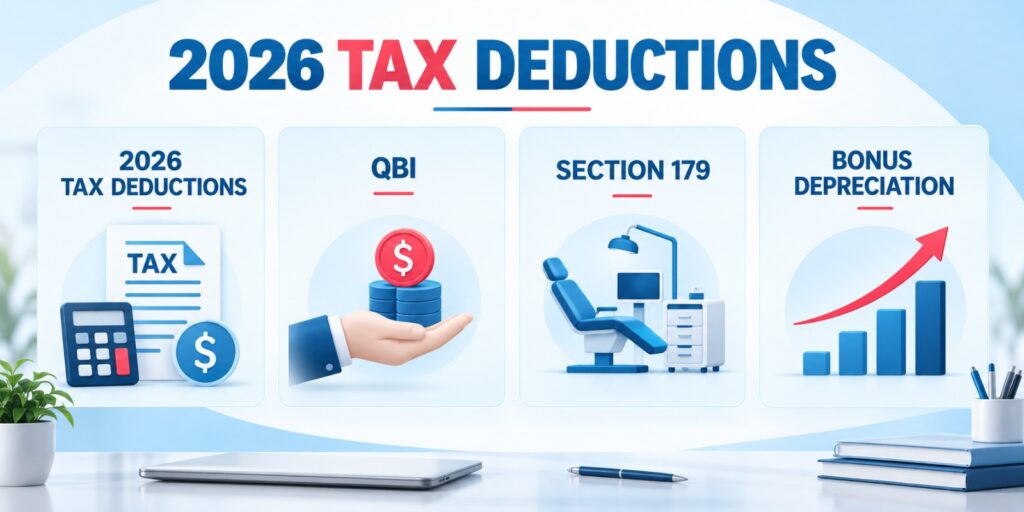
The qualified business income deduction can let eligible ecommerce owners deduct up to 20% of their qualified business income. The good news for 2026 is that this deduction is now permanent for qualifying businesses. It is not the same as an ordinary business expense. You do not need to spend money to claim it, but your income, business type, and other rules can affect whether you qualify and how much you can deduct.
2. 100% Bonus Depreciation Is Back
Buying equipment for your growing store? The 2026 rules allow 100% bonus depreciation for qualifying property. That can include certain computers, warehouse equipment, machinery, and other eligible business assets. Instead of waiting several years to recover the cost through depreciation, a qualifying business may be able to deduct the full cost in the first year.
3. Section 179 Limit Increased for 2026
Section 179 can also help sellers deduct the cost of qualifying equipment. For 2026, the deduction limit is $2.56 million, and the phaseout begins when qualifying property placed in service goes above $4.09 million. For ecommerce businesses investing heavily in equipment or expanding their operations, checking these limits could help identify deductions that might otherwise be missed.
The Ecommerce Tax Deductions Sellers Often Forget
Running an online store means paying for dozens of small services every month. Some may look too minor to worry about, but together they can add up to a meaningful amount. These are some of the ecommerce tax deductions sellers commonly overlook.
Payment Processing and Merchant Fees
Every sale may come with a fee, and those charges should not disappear from your records. Shopify and other payment gateways, Stripe, PayPal, credit card processors, and online marketplaces can all charge fees for processing or completing transactions.
So, are merchant fees tax deductible? In many cases, ordinary and necessary fees paid to run your business can be deductible. The same applies when asking, are PayPal fees tax deductible? or are credit card processing fees tax deductible? Generally, qualifying business fees can be deducted when properly documented.
Keep your monthly statements and reports so you can track these costs instead of only recording the amount that reaches your bank account.
Advertising and Marketing
Advertising can quickly become one of an ecommerce business’s biggest expenses. The good news is that is advertising tax deductible is usually a straightforward question when the spending is genuinely for your business.
Potentially deductible marketing costs can include:
- Google Ads and Meta ads
- Influencer marketing
- Affiliate commissions
- Product photography used for business promotion
- Email marketing software
- Promotional campaigns
The key is the purpose of the expense. An ad promoting your products is a business cost, while a personal purchase should not be turned into a business deduction just because it appears on the same credit card.
Business Insurance
Insurance is another cost that sellers sometimes forget when reviewing their ecommerce tax deductions. If you pay for coverage to protect your business, the cost may qualify as a business expense.
Depending on your business, this could include:
- General liability insurance
- Product liability insurance
- Commercial property insurance
- Business interruption coverage
- Certain professional coverage
Is business insurance tax deductible? Generally, qualifying insurance costs related to your trade or business can be deductible. Keep the policy documents and payment records with your other business records.
Professional and Software Costs
Your online store may depend on a long list of tools and professionals behind the scenes. Accounting fees, tax preparation fees, legal services, ecommerce platforms, inventory software, bookkeeping systems, and other business subscriptions can all add to your operating costs.
Do not ignore smaller monthly subscriptions simply because each charge seems insignificant. A $40 software bill may not seem important, but $40 every month becomes $480 over a year. Keep invoices and receipts for these services and review them regularly so legitimate business costs do not get lost when tax time arrives.
Ecommerce Tax Deductions for Your Home Office
If you run your ecommerce business from home, your workspace may qualify for a home office deduction. But simply working from your kitchen table or using a spare room occasionally does not automatically make the cost deductible. The IRS generally requires the space to meet specific rules, including regular and exclusive business use, although certain storage situations have exceptions.

Simplified Method: Easy to Calculate
The simplified method keeps the math simple:
- Rate: $5 per square foot
- Maximum space: 300 square feet
- Maximum deduction: $1,500
Example: If your qualifying home office is 200 square feet, you could claim a $1,000 deduction using the simplified method.
This option can be useful if you do not want to calculate individual household expenses. So, how much can you write off for home office? Under this method, the maximum is $1,500.
Regular Method: Track Your Actual Costs
The regular method looks at the actual costs of maintaining your home and applies the allowable business-use portion. Depending on your situation, Schedule C expenses may include:
- Rent
- Utilities
- Homeowners or renters insurance
- Mortgage interest
- Property taxes
- Repairs and maintenance
- Depreciation
For example, if a qualifying office takes up 10% of your home’s space, certain eligible household costs may be allocated based on that business-use percentage.
Can I Write Off My Home Office?
Can I write off my home office? Possibly, but the space must meet the applicable IRS requirements. A dedicated room used regularly and exclusively for your ecommerce work is easier to evaluate than a dining table that doubles as your workspace.
The important point is simple: do not claim a home office deduction just because you sometimes answer customer emails from home. Keep records of your workspace and expenses, and make sure your situation meets the rules before claiming the deduction.
Schedule C Expenses Ecommerce Sellers Should Review
If you run your online store as a sole proprietorship, you may report your business income and expenses on Schedule C with your individual tax return. That makes knowing your Schedule C expenses important. The goal is not to find as many deductions as possible. It is to correctly report the business costs you actually paid and can support with records.
Common Schedule C Expenses to Check
Ecommerce sellers may have deductible costs in several areas, including:
- Advertising: Google Ads, social media ads, influencer campaigns
- Insurance: Business and product liability coverage
- Professional services: Accounting, tax preparation, and legal fees
- Office expenses: Business supplies and qualifying office costs
- Utilities: Business-related utility costs when applicable
- Travel: Qualifying business trips and related expenses
- Vehicle costs: Eligible business mileage or vehicle expenses
- Contract labor: Payments to freelancers and independent contractors
- Rent: Business property, warehouse, or qualifying workspace
- Bank and payment fees: Merchant, payment processing, and account fees
- Home office: Qualifying costs claimed under the applicable home office rules
Not Every Business Purchase Is a Deduction
A common mistake is treating every payment made with a business card as a tax deduction. A business connection and proper records matter. Keep receipts, invoices, statements, and other documents that show what you purchased, how much you paid, and why the expense was for your business.
Also, do not assume the same rules apply to every ecommerce business. A sole proprietor, partnership, S corporation, and C corporation can have different reporting requirements and tax treatment. Before claiming Schedule C expenses, make sure the expense belongs to the right category and is reported using the rules that apply to your business structure.
Inventory Write-Offs: What Ecommerce Sellers Can Actually Deduct

Inventory can be one of the largest costs in an ecommerce business, which makes it an important part of your tax records. But an inventory write off is not as simple as removing the value of products that did not sell. The tax treatment can depend on your accounting method, what happened to the inventory, and the facts of your business. Getting this wrong can affect both your taxable income and your financial reports.
Cost of Goods Sold Is Not the Same as a Regular Expense
Suppose you purchase $50,000 of products, but only sell $30,000 worth during the year. You generally cannot treat the entire $50,000 as an ordinary business expense simply because you paid for it.
Instead, inventory costs are generally tracked through cost of goods sold (COGS) and inventory accounting. The timing of the deduction depends on the applicable tax and accounting rules.
This is why accurate records matter. Your books should clearly show:
- What you purchased
- What you sold
- What remains in inventory
- The cost assigned to that inventory
- Related shipping and other applicable costs
A proper cost of goods sold deduction starts with knowing exactly what happened to your inventory.
What About Obsolete Inventory?
What happens when products are sitting in your warehouse and nobody wants them anymore? Obsolete inventory may include products that are:
- Damaged
- Expired
- Outdated
- Discontinued
- Destroyed
- Unsellable
- No longer useful for sale
But unsold does not automatically mean worthless. A product that has not sold yet may still have value and cannot simply be written off because it is moving slowly.
The tax treatment of obsolete inventory depends on the applicable accounting method and the facts surrounding the inventory. Sellers should document what happened to the products and why they no longer have usable value before making an adjustment.
How to Write Off Inventory Properly
If you believe inventory qualifies for a write-off, do not simply delete it from your records. A better approach is to:
- Step 1: Identify the inventory: List the specific products, quantities, and original costs.
- Step 2: Document the problem: Record why the inventory is damaged, expired, obsolete, destroyed, or otherwise unusable.
- Step 3: Review its actual value: Determine if the products truly have no remaining value or if they can still be sold, returned, donated, or otherwise used.
- Step 4: Check your accounting method: The correct treatment can vary based on how your business accounts for inventory.
- Step 5: Record the adjustment correctly: Make the appropriate accounting entry instead of simply removing the items.
- Step 6: Keep supporting records: Save photos, disposal records, inventory reports, supplier documents, and other evidence supporting the adjustment.
For sellers looking at Amazon seller tax deductions, inventory records are especially important because marketplace reports, fulfillment costs, fees, returns, and inventory movements can all affect your actual profit. Clean inventory records make it much easier to determine what you can properly deduct and what should remain on your books.
Are Tariffs Tax Deductible for Ecommerce Sellers?
With import costs changing quickly, “are tariffs tax deductible” is an important question for ecommerce sellers in 2026. The answer is not always as simple as putting a customs or tariff payment under “business expenses.” If you import products for resale, the way you account for those duties can affect your inventory value and cost of goods sold (COGS).
Tariffs May Become Part of Your Inventory Cost
When tariffs or import duties are paid to bring products into the country, they can be part of the cost of acquiring that inventory, depending on the applicable accounting and tax rules. The deduction may therefore happen through COGS when the related inventory is sold rather than immediately when the tariff is paid.
For example, imagine you import $20,000 worth of products and pay $3,000 in import duties. You should not automatically record that $3,000 as an unrelated office or operating expense. The duty may need to be included in the cost of the imported inventory and accounted for under the method your business uses.
Why Proper Classification Matters
A tariff payment can affect more than one number in your books. Recording it incorrectly could make your inventory value, COGS, and reported profit inaccurate.
Keep records such as:
- Customs documents
- Import invoices
- Duty and tariff statements
- Freight records
- Product purchase invoices
If your ecommerce business imports products regularly, review how these costs are recorded before filing your return. The right treatment can depend on your inventory accounting method and specific circumstances, so avoid assuming that every tariff payment gets an immediate deduction.
Can Ecommerce Sellers Deduct Bad Debts?
Not every ecommerce sale is paid at checkout. If you sell to businesses or wholesale customers on credit, you may eventually have a customer who does not pay. That is where a bad debt deduction may come into play. However, you cannot simply deduct every unpaid invoice. The tax treatment depends on how the debt arose and how your business reports its income.
When Bad Debt Becomes Relevant
Traditional bad debt is often less common for direct-to-consumer ecommerce sellers because customers usually pay by card or another payment method before the order is shipped. It can be more important for businesses that allow customers to pay later, such as:
- B2B ecommerce sellers
- Wholesale businesses
- Net-30 or net-60 accounts
- Sellers with business customers who fail to pay
For example, if you sell $5,000 of products to a business on credit and the customer later becomes unable to pay, you may need to determine if the unpaid amount qualifies for tax treatment as a business bad debt.
Business Debt vs. Personal Debt
A business bad debt comes from your trade or business, such as an unpaid customer account connected to your sales. A personal bad debt is different and follows different tax rules.
Before claiming a bad debt deduction, keep invoices, payment records, collection attempts, and other documents showing that the debt was real and became uncollectible. The rules can also differ based on your accounting method, so do not treat every unpaid invoice as automatically deductible.
Is Sales Tax Deductible?
Is sales tax deductible? For ecommerce sellers, the answer depends on whether you are collecting sales tax from customers or paying sales tax on business purchases. Keeping these two situations separate is important because they are treated differently in your books and for tax purposes.
Sales Tax Collected From Customers
Sales tax collected from customers is generally not business income. You collect it on behalf of the applicable state or local tax authority and generally owe that amount to the tax authority.
For example, if a customer pays $100 for a product and $8 in sales tax, the $8 is generally recorded as a sales tax liability, not as an additional $8 of revenue. Proper ecommerce sales tax compliance helps keep these amounts separate from your actual sales.
Sales Tax You Pay on Business Purchases
Sales tax you pay when buying inventory, supplies, equipment, or other business items is different. Its tax treatment can depend on what you purchased and the accounting rules that apply to your business.
For example, sales tax paid on inventory may become part of the inventory’s total cost and later factor into COGS. Sales tax paid on other qualifying business purchases may be included in the cost of that asset or expense.
The important thing is not to assume that every sales tax payment is automatically deductible. Record each transaction correctly and keep invoices and receipts to support how the cost was treated.
Amazon Seller Tax Deductions: Costs You Should Not Miss
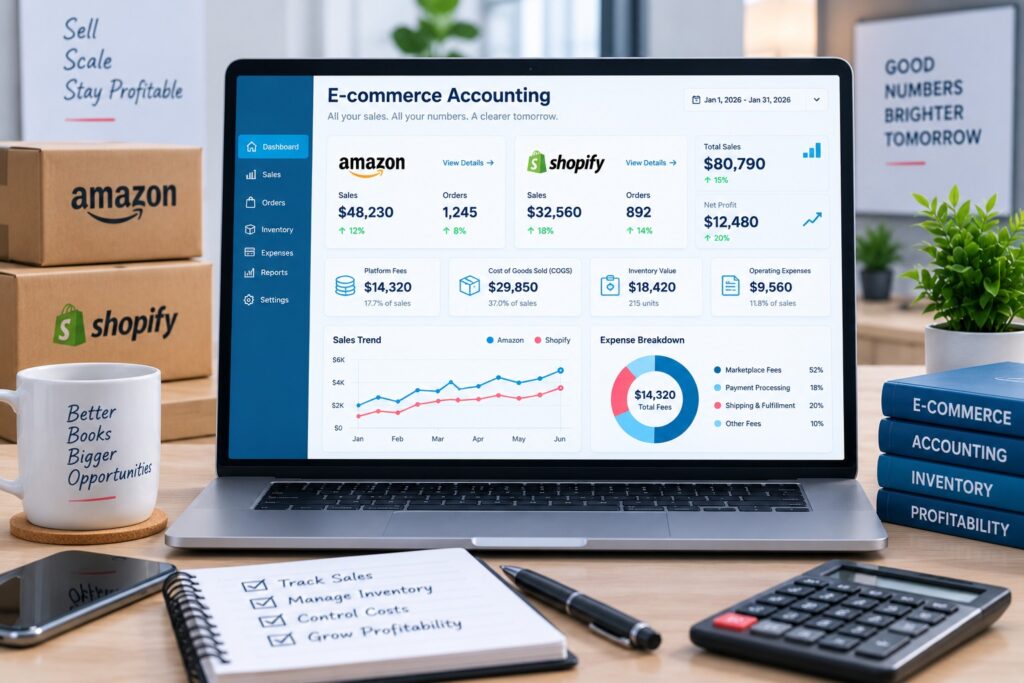
Amazon sellers deal with many fees between making a sale and receiving a payout. That is why Amazon seller tax deductions can easily be missed when you only look at the amount deposited into your bank account. The deposit is usually a net amount after Amazon has applied fees, refunds, adjustments, and other charges.
Amazon Costs That May Qualify
Depending on your business and the applicable tax rules, common costs to track can include:
- FBA fees
- Referral fees
- Storage fees
- Fulfillment fees
- Removal and disposal fees
- Amazon advertising
- Seller software
- Product photography
- Professional and accounting fees
- Shipping and freight
- Inventory costs
These expenses should be recorded based on what they actually represent rather than grouped together without details.
Don’t Use the Net Deposit as Your Expense Record
Suppose Amazon shows $10,000 in sales, deducts $2,000 in various fees and adjustments, and deposits $8,000 into your bank account. Recording only the $8,000 deposit does not give you a complete picture of your sales or expenses.
Amazon reports can include sales, refunds, FBA charges, referral fees, reimbursements, advertising costs, and inventory adjustments. Each can affect your books differently.
For this reason, Amazon seller accounting services can help with fee reconciliation, reimbursement tracking, inventory adjustments, and COGS calculations. Keeping these records separate gives you a clearer view of your actual revenue, expenses, and taxable profit.
Coworking Space and Other Workspace Costs
Your ecommerce business does not have to run entirely from your home. If you pay for a workspace to handle business tasks, a coworking space tax deduction may be available when the expense meets the applicable tax requirements.
Workspace Costs to Keep Track Of
Depending on how the space is used, keep records of costs such as:
- Coworking memberships
- Dedicated workspace fees
- Meeting room charges
- Business internet
- Office supplies
A coworking membership used for customer meetings, order management, bookkeeping, or other business activities is different from paying for a space mainly for personal use.
Coworking Space vs. Home Office
A coworking space tax deduction and a home office deduction are not automatically interchangeable. Your eligibility depends on your circumstances and how each space is used. You also cannot deduct the same expense twice. Keep separate records for your home workspace and coworking costs so each expense is reported correctly.
How Ecommerce Sellers Can Keep Better Records for Tax Deductions
Good records can make it much easier to claim ecommerce tax deductions and prepare your return accurately. Instead of searching through emails and bank statements at tax time, keep your business records organized throughout the year.
Keep These Records
Save documents that show what you paid, what you bought, and why the cost was related to your business:
- Invoices and receipts
- Amazon settlement reports
- Shopify reports
- PayPal and Stripe statements
- Advertising invoices
- Inventory purchase records
- Customs documents
- Insurance bills
- Business mileage records
- Home-office measurements
- Software invoices
Reconcile Your Numbers
Your records should also match across your sales platforms, payment processors, and bank account. Review:
- Gross sales and refunds
- Payment and marketplace fees
- Sales tax
- Inventory and COGS
- Bank deposits
For example, a $10,000 bank deposit from Shopify or Amazon does not necessarily mean you made $10,000 in sales. Fees, refunds, and other adjustments may have been removed before the money reached your account.
A properly organized ecommerce chart of accounts can help keep sales, refunds, inventory, COGS, marketplace fees, and payment processing costs in the right categories.
Clean books also make tax preparation easier. Your tax preparer can work from organized, reconciled numbers instead of spending hours trying to rebuild your business records at year-end.
GATP Solutions Helps Ecommerce Sellers Keep Tax-Ready Books
Ecommerce tax deductions are easier to manage when your books clearly show where your money is going. GATP Solutions works with Amazon, Shopify, and DTC businesses on ecommerce bookkeeping, multi-channel accounting, inventory and COGS tracking, tax services, and CFO support. This helps sellers keep sales, expenses, fees, and inventory records organized as their businesses grow.
For sellers operating across several platforms, keeping accurate records can become difficult. Amazon, Shopify, payment processors, and other marketplaces may report sales, refunds, fees, reimbursements, and adjustments separately. These numbers need to be matched and recorded correctly so your financial reports reflect what actually happened.
From reconciling marketplace payouts to tracking inventory costs and payment fees, organized books provide the financial information needed for tax preparation. They also make it easier to spot missing expenses, understand profit margins, and make better decisions throughout the year instead of trying to sort everything out at tax time.
Conclusion
Ecommerce tax deductions can make a real difference to your taxable income when you know what to track and how each expense should be treated. In 2026, sellers have important opportunities to review deductions, but the biggest savings are not always from major purchases. Payment fees, advertising, insurance, workspace costs, inventory adjustments, COGS, and other everyday business expenses can add up throughout the year.
Good records are just as important as knowing a deduction exists. Keep receipts, invoices, platform reports, and other supporting documents, and remember that tax treatment can vary based on your business structure and individual circumstances.
Before another tax season passes with missed expenses, connect with GATP Solutions to keep your ecommerce financial records organized and tax-ready.
Frequently Asked Questions
Is sales tax deductible?
It depends on how the sales tax was handled. Sales tax collected from customers is generally not your business income. Sales tax paid on business purchases may be included in the cost of the purchase or inventory, depending on the item and applicable tax rules.
Is business insurance tax deductible?
Generally, qualifying insurance costs paid to protect your business can be deductible. This may include general liability, product liability, commercial property, and certain other business-related coverage. Keep your policy documents and payment records.
Are tariffs tax deductible?
Tariffs and import duties on products purchased for resale may become part of the inventory cost and can affect COGS when the inventory is sold. They should not automatically be recorded as a separate operating expense. The correct treatment depends on your accounting method and circumstances.
Are business gifts tax deductible?
Business gifts are subject to specific tax limits. In many cases, the deduction for business gifts is limited to $25 per recipient per year, even if you spend more. Keep records showing who received the gift, the business purpose, and the amount spent.
Are merchant fees tax deductible?
Generally, ordinary and necessary merchant and payment processing fees related to your business can be deductible. This may include credit card processing charges, payment gateway fees, and marketplace transaction fees. Keep statements showing the fees separately from your sales.
Is advertising tax deductible?
Generally, legitimate advertising and marketing costs used to promote your business can be deductible. Examples include Google Ads, Meta advertising, influencer campaigns, affiliate marketing, and qualifying promotional expenses.
How much can you write off for home office?
Under the IRS simplified method, qualifying taxpayers can generally claim $5 per square foot, up to 300 square feet, for a maximum deduction of $1,500. The regular method uses qualifying actual expenses and may produce a different deduction.
Are PayPal fees tax deductible?
Generally, PayPal fees paid for processing business transactions can be deductible when they are ordinary, necessary, and properly documented. Keep PayPal statements so the fees can be separated from your actual sales.
Is inventory tax deductible?
Inventory is generally handled differently from ordinary business expenses. The cost of inventory typically becomes part of COGS when the related products are sold, subject to the accounting method and tax rules that apply to your business. Unsold inventory is not automatically deductible.
Are shipping costs tax deductible?
Business shipping costs can generally be deductible when they are ordinary and necessary for the business. However, shipping and freight costs connected to purchasing inventory may need to be included in inventory costs rather than deducted immediately. Proper classification is important.