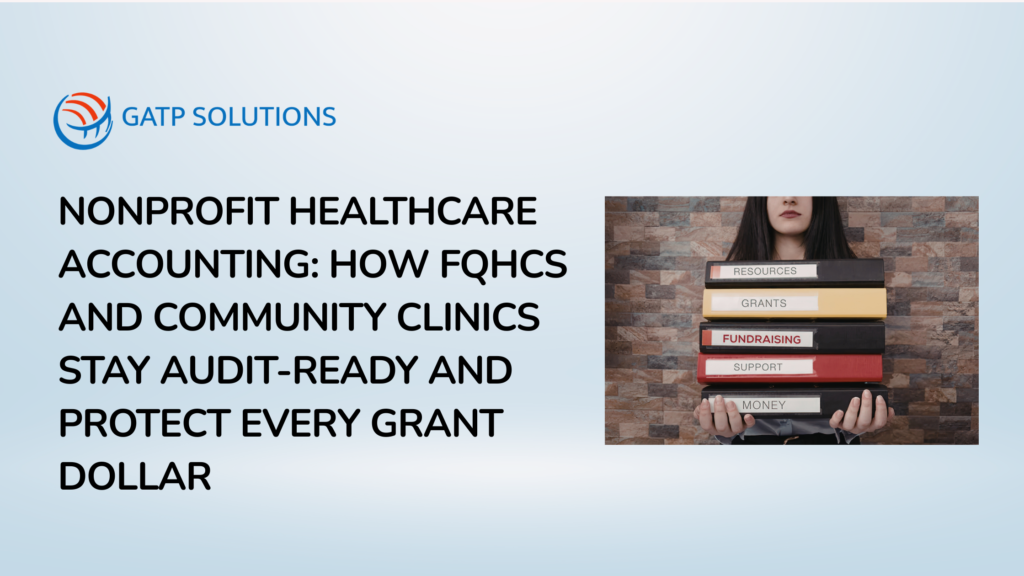
Missing records, unclear expenses, or poor grant tracking can put your funding at risk. That’s why accounting for nonprofit healthcare organization is so important. It helps you keep every dollar organized, stay ready for audits, and show donors and funding agencies exactly how their money is being used.
If you manage an FQHC, community clinic, or nonprofit hospital, your finances are different from those of a regular business. Along with patient income, you also need to manage grants and donations. That’s where accounting for healthcare organizations and fund accounting for nonprofits make a real difference.
In this guide, we’ll explain not for profit fund accounting in simple terms and share practical tips to help you stay compliant, protect every grant dollar, and keep your organization financially strong. We’ll also cover the five core reports that feed your monthly healthcare financial reporting KPIs.
What Is Accounting for Nonprofit Healthcare Organization?
Accounting for nonprofit healthcare organization is the process of tracking, managing, and reporting money in a way that meets legal and funding requirements. Unlike a regular business, the goal isn’t to earn profits but to make sure every dollar is used for patient care and community programs.
Good accounting for healthcare organizations also means keeping grants, donations, and patient income separate. This is where fund accounting for nonprofits helps. It makes it easier to track different funding sources, prepare accurate reports, and stay ready for audits while building trust with donors and funding agencies.
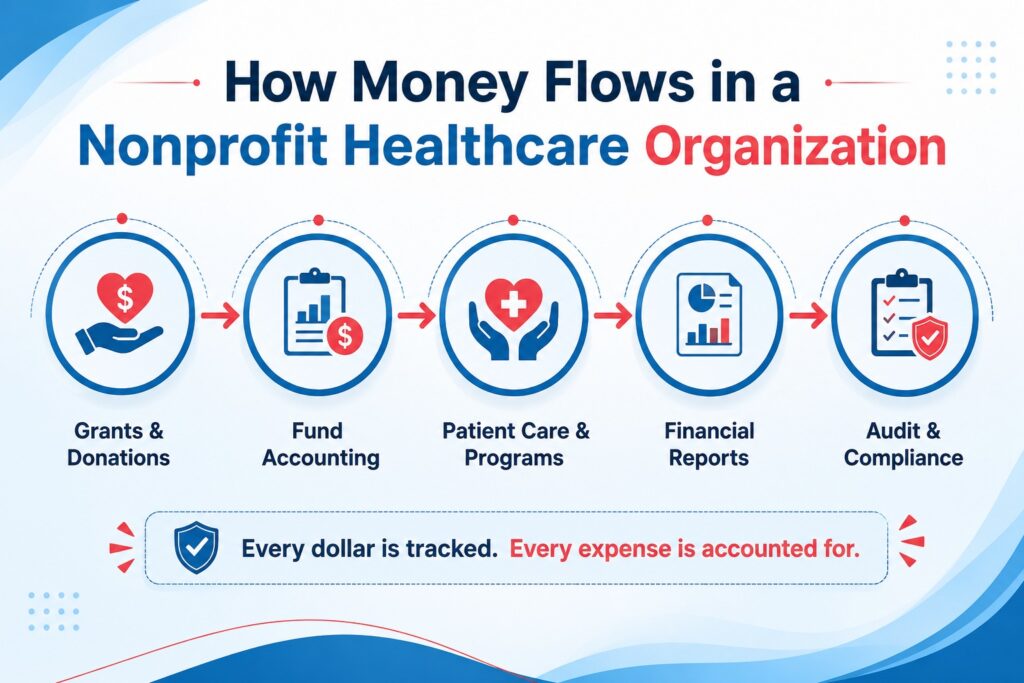
Why Healthcare Nonprofits Need a Different Accounting System
Healthcare nonprofits manage money from many different sources, and each one comes with its own rules. That’s why accounting for healthcare organizations requires a different approach than regular business accounting.
- Multiple Funding Sources: Community clinics often receive grants, donations, government funding, and patient service revenue. Each source must be tracked separately.
- Fund Accounting: Fund accounting for nonprofits helps keep restricted and unrestricted funds separate, making it easier to use money for the right purpose.
- Grant Compliance: Many grants have strict spending rules. Good nonprofit fund accounting helps you show where every grant dollar was spent.
- Accurate Financial Reports: Reports like the statement of financial position, statement of activities, and statement of cash flows help leaders, donors, and funding agencies understand the organization’s finances.
- Audit Readiness: Organized records, proper documentation, and strong internal controls make financial audits for nonprofits smoother and reduce compliance risks.
- Tax-Exempt Requirements: Most nonprofit healthcare organizations operate as 501(c)(3) entities and must file Form 990 to maintain their tax-exempt status.
What Is Fund Accounting in a Nonprofit?
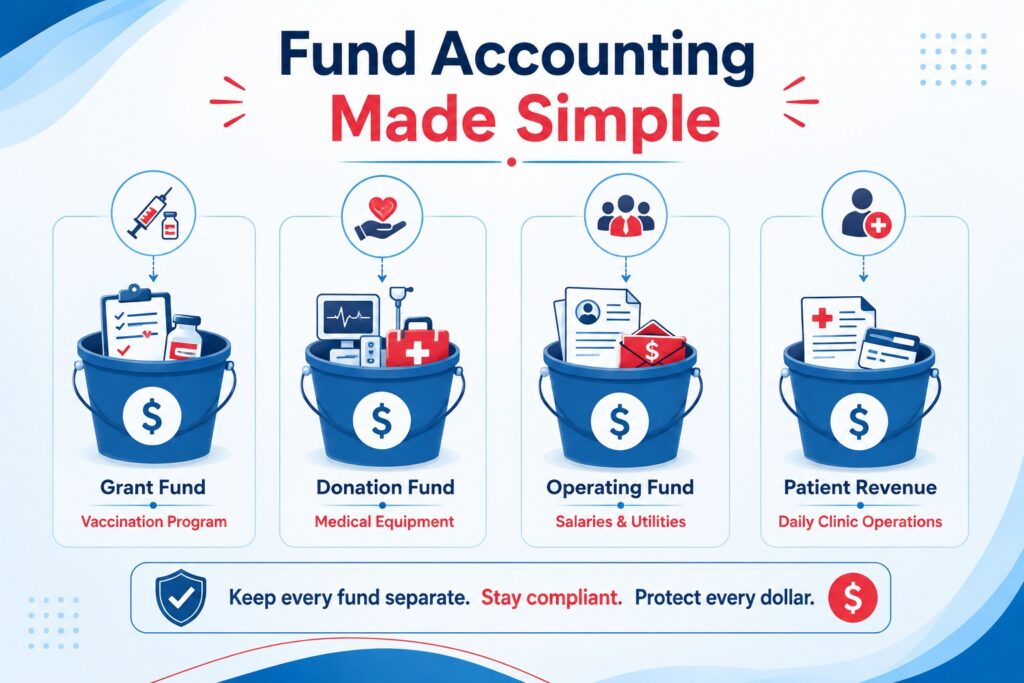
If you’ve ever kept money in separate envelopes for different expenses, you’ve already understood the basic idea of fund accounting. In a nonprofit, fund accounting for nonprofits works the same way. It keeps money from grants, donations, and other funding sources separate so each dollar is spent for its intended purpose. This not for profit fund accounting system helps organizations avoid mixing funds, prepare accurate reports, and stay compliant. It also makes audits easier and builds trust with donors, grant providers, and the communities they serve.
Why Fund Accounting Matters for Community Clinics
Community clinics often receive money from different programs, and each fund may have its own spending rules. Fund accounting helps keep everything organized and easy to track.
- Keeps Grant Money Separate: Each grant or donation is tracked individually, so funds are only used for the purpose they were given.
- Makes Reporting Easier: Clear records make it simple to prepare financial reports for donors, board members, and funding agencies.
- Reduces Audit Stress: Well-organized records help clinics stay ready for audits and answer questions with confidence.
- Builds Donor Trust: When every dollar is tracked properly, donors and grant providers have more confidence in the organization.
- Supports Better Decisions: Knowing how much money is available in each fund helps leaders plan programs and manage resources wisely.
Understanding Net Assets Without the Confusing Accounting Terms
In a regular business, you often hear the term “owner’s equity.” But in a nonprofit, it’s called net assets. Simply put, net assets are the money and resources your organization has left after paying all its bills and obligations.
There are two main types of net assets. Net assets with donor restrictions are funds that donors or grant providers want you to use for a specific purpose, such as buying medical equipment or running a healthcare program. You can’t spend this money on anything else.
The second type is net assets without donor restrictions. These funds can be used wherever they are needed most, such as staff salaries, rent, utilities, or patient care. Keeping these funds separate helps improve nonprofit fund accounting, ensures compliance, and makes financial reporting much easier. The same split applies to staff pay, since a salary funded by a grant has to be charged to that grant, which makes payroll for healthcare workers part of your fund accounting.
The 5 Financial Reports Every Nonprofit Healthcare Organization Needs
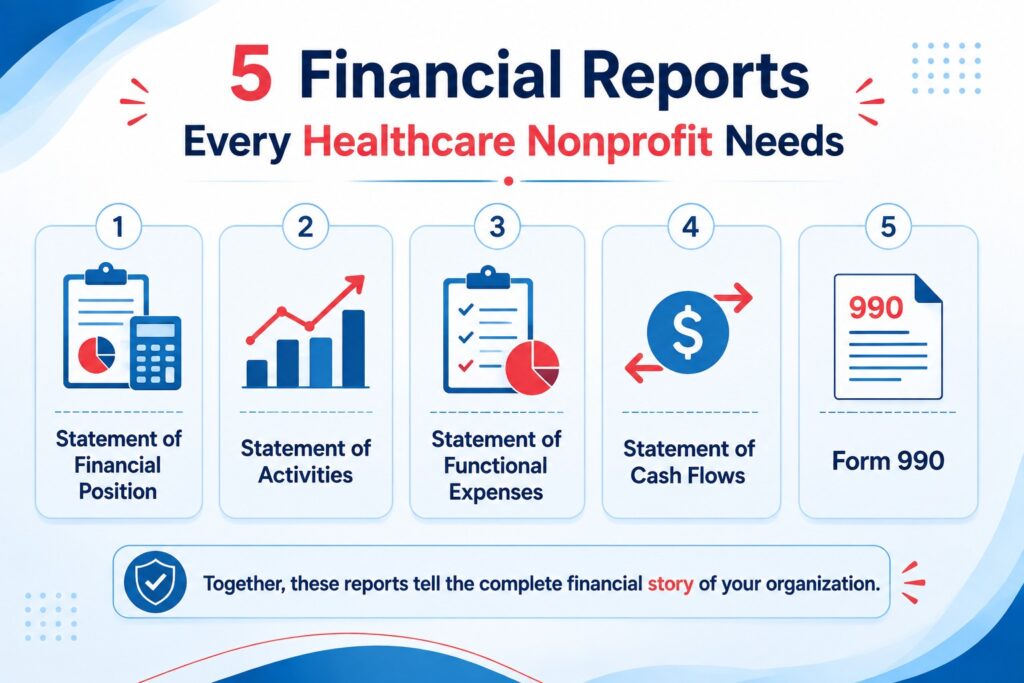
Every nonprofit healthcare organization needs clear financial reports to understand where money comes from, where it goes, and whether the organization is meeting reporting and compliance requirements.
Statement of Financial Position
The statement of financial position is similar to a balance sheet used by businesses. It shows what the organization owns (assets), what it owes (liabilities), and its net assets at a specific point in time. This report gives board members, donors, and lenders a quick view of the organization’s financial health.
Statement of Activities
Think of the statement of activities as a report card for your organization’s finances. It shows all income, such as grants, donations, and patient service revenue, along with all expenses during a specific period. It also explains how changes in income and spending affect the organization’s net assets.
Statement of Functional Expenses
The statement of functional expenses shows exactly how money is spent. Expenses are grouped into categories like patient care, management, administration, and fundraising. This report helps donors and funding agencies see that resources are being used responsibly.
Statement of Cash Flows
The statement of cash flows tracks the money coming into and going out of the organization. It helps leaders understand whether there is enough cash to pay employees, suppliers, and daily operating costs, even if grant payments or reimbursements are delayed.
Form 990
Form 990 is an annual tax return that most 501(c)(3) nonprofit organizations must file with the IRS to maintain their tax-exempt status. It provides information about the organization’s finances, leadership, programs, and governance. Since it is a public document, donors, grant providers, and community members often review it to understand how the organization manages its funds.
How Revenue Recognition Works in Nonprofit Healthcare
Nonprofit healthcare organizations receive money from different sources, and each one follows different reporting rules. Recording income at the right time helps maintain accurate financial records, meet GAAP guidelines, and stay audit-ready.
| Source of Income | When Is It Recorded? | Simple Example | Why It Matters |
| Patient Service Revenue | When healthcare services are provided, even if payment is received later. | A clinic treats a patient in June but receives payment from insurance in July. The income is recorded in June. | Gives a true picture of the organization’s income for that period. |
| Grants | Based on the terms and conditions of the grant agreement. | A grant is approved for a vaccination program. The money is recorded only when the clinic meets the required conditions. | Ensures grant funds are reported correctly and used for the approved purpose. |
| Contributions (Donations) | Recorded when the donation is received or officially promised, depending on the donor’s agreement. | A donor promises to give $20,000 for new medical equipment. The organization records it according to GAAP and donor requirements. | Helps track donor support and maintain transparency. |
| Government Reimbursements | Recorded after eligible healthcare services are provided and reimbursement requirements are met. | Medicare reimburses the clinic after treating eligible patients. | Prevents recording income before it is earned. |
| Program or Membership Fees | Recorded when the related service or program is delivered. | A community wellness program collects annual fees. The income is recognized as the services are provided throughout the year. | Matches income with the services delivered to patients and the community. |
Following GAAP and FASB ASC 958 helps nonprofit healthcare organizations recognize patient service revenue, grants, and contributions correctly. This improves financial reporting, keeps audits smooth, and gives donors and funding agencies confidence that every dollar is being managed responsibly. Patient service revenue and reimbursement timing are also where healthcare accounting services differ most from general nonprofit bookkeeping.
How FQHCs Stay Audit-Ready All Year
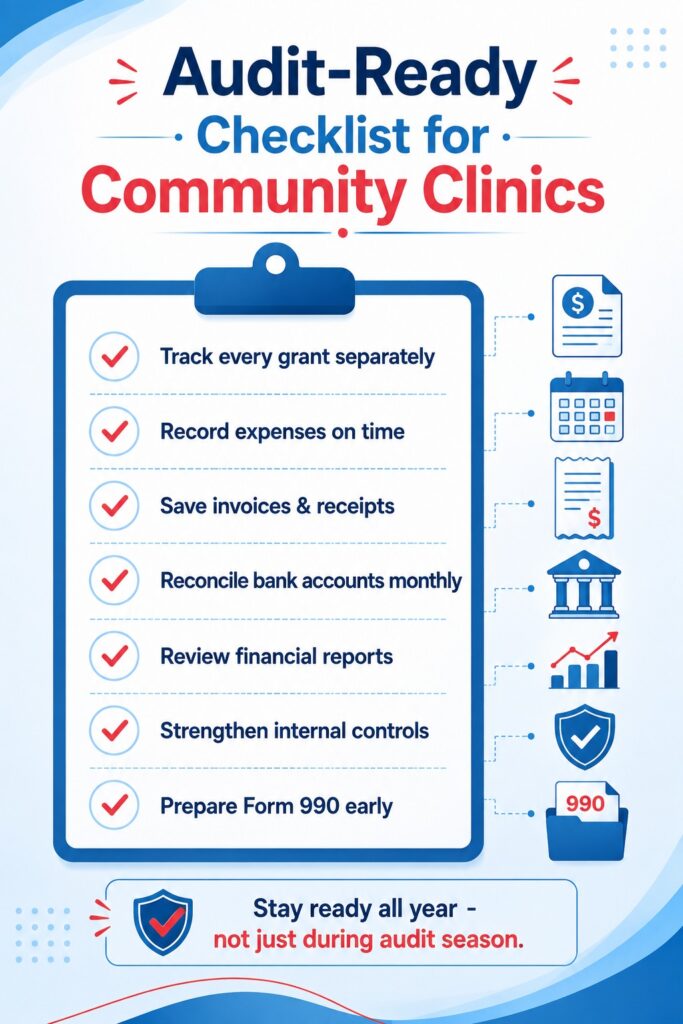
Waiting until audit season to organize financial records can create unnecessary stress. Successful FQHCs stay audit-ready throughout the year by following simple habits and keeping their financial information accurate and up to date.
- Track Every Grant Separately: Record all grants and donations in separate funds so it’s easy to show where each dollar was spent.
- Update Financial Records Regularly: Record income and expenses every week or month instead of waiting until the end of the year.
- Keep Supporting Documents: Save invoices, receipts, payroll records, bank statements, and grant agreements for every transaction.
- Review Financial Reports Monthly: Check reports like the statement of financial position and statement of activities to catch errors early.
- Strengthen Internal Controls: Set clear approval processes, separate financial duties, and regularly review transactions to reduce mistakes and fraud.
- Reconcile Bank and Grant Accounts: Match bank statements and grant balances with accounting records every month to ensure everything is accurate.
- Prepare for Form 990 Early: Gather the required financial information throughout the year so filing Form 990 becomes faster and more accurate.
- Conduct Internal Reviews: Regularly review financial records before the annual audit to identify and fix issues before auditors do.
Following these practices makes accounting for nonprofit healthcare organization much easier, reduces audit risks, and helps protect every grant dollar while building trust with donors and funding agencies.
Common Accounting Mistakes That Put Grant Funding at Risk
Even small accounting mistakes can create big problems for nonprofit healthcare organizations. They can delay funding, trigger audit findings, and reduce the trust of donors and grant providers.
| Common Mistake | Impact on the Organization | How to Resolve It |
| Mixing Grant Funds | Grant money may be spent on the wrong program, leading to compliance issues or repayment requests. | Use fund accounting to keep each grant and donation in a separate fund. |
| Poor Expense Tracking | Missing or incorrect expense records make it difficult to prove how grant money was used. | Record every expense promptly and keep invoices, receipts, and supporting documents. |
| Not Following Grant Rules | Spending outside the approved budget can result in lost funding or grant penalties. | Review grant agreements carefully and monitor spending throughout the project. |
| Delayed Bank Reconciliation | Errors and missing transactions can go unnoticed for months. | Reconcile bank accounts and grant balances every month. |
| Weak Internal Controls | Increases the risk of fraud, duplicate payments, and accounting errors. | Set approval limits, separate financial responsibilities, and review transactions regularly. |
| Incorrect Revenue Recognition | Financial reports may not follow GAAP or FASB ASC 958, causing audit issues. | Record patient service revenue, grants, and contributions according to accounting standards. |
| Late or Inaccurate Form 990 Filing | Can lead to IRS penalties and may affect the organization’s tax-exempt status. | Prepare financial records throughout the year and review Form 990 before filing. |
| Ignoring Monthly Financial Reviews | Small problems can grow into major audit findings by year-end. | Review the statement of financial position, statement of activities, and other financial reports every month. |
Avoiding these common mistakes strengthens accounting for nonprofit healthcare organization, keeps audits smoother, and helps ensure every grant dollar is used exactly as intended.
Internal Controls That Protect Every Grant Dollar
Strong internal controls are the simple rules and processes that help nonprofit healthcare organizations manage money safely and correctly. They reduce errors, prevent fraud, and make sure every grant dollar is used for its intended purpose.
For example, one person can approve an expense while another records the payment. Regularly reviewing bank statements, checking financial reports, and keeping receipts for every transaction also help maintain accurate records. These small steps make fund accounting more reliable and support better accounting and financial reporting for nonprofit healthcare organizations.
Good internal controls also make financial audits for nonprofits much easier. They improve compliance with GAAP, strengthen donor confidence, and help organizations stay ready for audits while protecting their grants, net assets, and overall financial health.
Best Accounting Software for Nonprofit Healthcare Organizations in 2026
The right accounting software can save time, reduce manual work, and make financial reporting much easier. For nonprofit healthcare organizations, the best tools support fund accounting, grant tracking, compliance, and real-time reporting while keeping financial data secure and organized.
| Accounting Software | Best For | Key Features | Benefits | Cloud-Based |
| Sage Intacct Nonprofit | Large nonprofit hospitals, FQHCs, and multi-location healthcare organizations | Fund accounting, grant tracking, budgeting, dashboards, automated financial reporting, multi-entity management | Improves financial visibility, simplifies audits, and supports detailed grant reporting | Yes |
| Blackbaud Financial Edge NXT | Established nonprofit healthcare organizations | Fund accounting, donor management integration, budgeting, expense tracking, financial reporting | Helps manage restricted funds, improve compliance, and create board-ready reports | Yes |
| MIP Fund Accounting | Community clinics and nonprofits managing multiple grants | Fund accounting, grant management, payroll, budgeting, custom reports | Tracks every funding source separately and simplifies grant compliance | Yes |
| Oracle NetSuite for Nonprofits | Growing healthcare nonprofits with complex financial operations | Cloud ERP, fund accounting, project tracking, financial planning, real-time dashboards | Combines accounting and business management in one platform for better decision-making | Yes |
| QuickBooks Enterprise Nonprofit | Small to mid-sized nonprofit healthcare organizations | Income and expense tracking, donor reporting, payroll, budgeting, customizable reports | Easy to use, affordable, and suitable for organizations with simpler accounting needs | Desktop (Cloud hosting available) |
| Aplos | Small community clinics and charitable healthcare organizations | Fund accounting, donation tracking, budgeting, online reporting, Form 990 support | User-friendly, budget-friendly, and ideal for organizations with limited accounting staff | Yes |
Step-by-Step Process to Improve Accounting in a Community Clinic
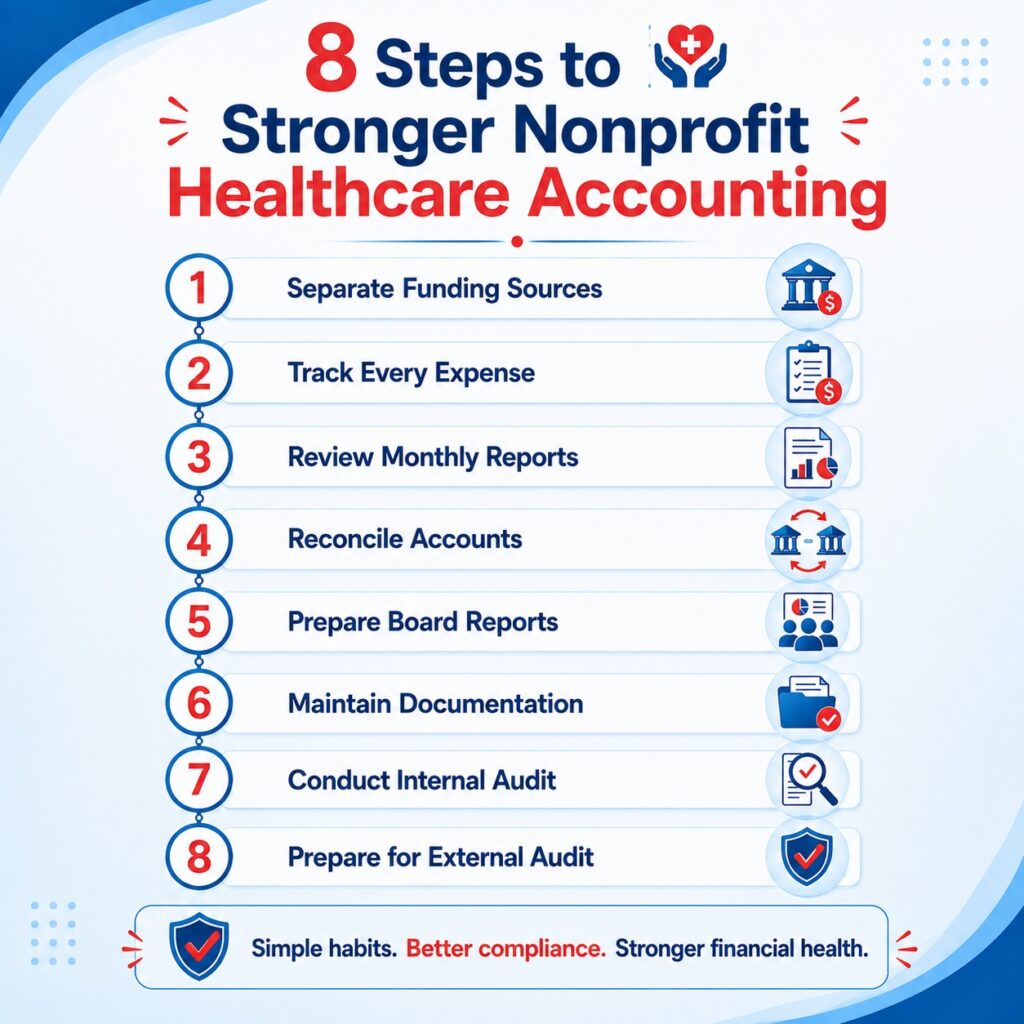
Good accounting doesn’t happen by accident. It comes from following a simple process throughout the year. These eight steps can help community clinics improve accounting for nonprofit healthcare organization, stay compliant, and keep every grant dollar properly tracked.
Step 1: Separate Every Funding Source
Create separate funds for grants, donations, government funding, and patient service revenue. Using fund accounting for nonprofits helps ensure that money is spent only for its approved purpose and makes financial reporting much easier.
Step 2: Track Every Expense
Record every expense as soon as it happens and keep supporting documents like invoices, receipts, and payroll records. This helps improve accuracy and provides clear proof during a financial audit for nonprofits.
Step 3: Review Monthly
Review your financial reports every month, including the statement of financial position, statement of activities, and cash flow report. Regular reviews help identify errors early and keep your finances on track.
Step 4: Reconcile Accounts
Match your accounting records with bank statements and grant balances every month. Regular reconciliation helps catch missing transactions, avoid mistakes, and maintain accurate financial records.
Step 5: Prepare Board Reports
Share simple financial reports with your board that explain income, expenses, budgets, and net assets. Clear reporting helps leaders make informed decisions and maintain transparency.
Step 6: Maintain Documentation
Keep grant agreements, invoices, receipts, payroll records, contracts, and bank statements in one organized place. Good documentation supports accounting and financial reporting for nonprofit healthcare organizations and makes audits much easier.
Step 7: Conduct Internal Audit
Review your financial records and internal controls regularly to identify problems before an external auditor does. Small corrections made throughout the year can prevent bigger compliance issues later.
Step 8: Prepare External Audit
Before the annual audit, make sure your financial statements, supporting documents, and Form 990 information are complete and accurate. Being well prepared reduces audit delays and helps build trust with donors, grant providers, and regulators.
Why Many Healthcare Nonprofits Outsource Their Accounting
Managing nonprofit finances takes time, expertise, and constant attention to compliance. That’s why many healthcare nonprofits choose outsourced accounting to improve accuracy, reduce workload, and stay focused on serving their communities.
- Access to Experienced Experts: Outsourced accounting teams understand accounting for nonprofit healthcare organization, grant reporting, and healthcare regulations, helping organizations avoid costly mistakes.
- Better Grant Management: Professionals use fund accounting for nonprofits to track grants, donations, and patient service revenue separately, making financial reporting more accurate.
- Improved Compliance: Experienced accountants help organizations follow GAAP, FASB ASC 958, and IRS reporting requirements, reducing compliance risks.
- Lower Operating Costs: Hiring an external accounting team is often more affordable than building and managing a full in-house finance department.
- More Time for Patient Care: Staff can spend less time on paperwork and more time improving healthcare services and supporting the community.
- Audit-Ready Financial Records: Outsourced experts maintain organized records, strengthen internal controls, and prepare reports that make financial audits for nonprofits smoother.
- Better Financial Insights: Regular reports and expert advice help leadership make informed decisions, manage budgets wisely, and protect every grant dollar.
How GATP Solutions Helps Nonprofit Healthcare Organizations Stay Compliant
Managing the finances of a nonprofit healthcare organization can be challenging, especially when you’re balancing grants, donations, patient service revenue, payroll, and compliance. GATP Solutions makes this easier with AI-powered accounting services designed to help healthcare nonprofits stay organized and audit-ready.
Our team supports every aspect of accounting for nonprofit healthcare organization, from fund accounting for nonprofits and grant tracking to bookkeeping, payroll, financial reporting, and Virtual CFO services. We help you maintain accurate records, prepare reports like the statement of financial position and statement of activities, and follow GAAP and FASB ASC 958 reporting requirements.
With strong internal controls, timely reconciliations, and clear financial reports, we help protect every grant dollar and simplify accounting and financial reporting for nonprofit healthcare organizations. This allows your team to spend less time managing paperwork and more time delivering quality care to the communities that need it most.
Final Thoughts
Strong accounting for nonprofit healthcare organization is about more than keeping financial records, it helps protect grants, support better decisions, and build trust with donors, board members, and funding agencies. By using fund accounting for nonprofits, tracking every funding source, and maintaining accurate reports, healthcare organizations can stay compliant and ready for audits throughout the year.
Whether you manage an FQHC, community clinic, or nonprofit hospital, investing in the right processes and accounting software for nonprofit healthcare organizations can save time, reduce errors, and improve financial transparency. A well-planned not for profit fund accounting system also ensures every dollar is used where it matters most, serving patients and strengthening your community.
Need expert support? GATP Solutions provides AI-powered bookkeeping, accounting, payroll, tax, and Virtual CFO services to help your nonprofit healthcare organization stay compliant, audit-ready, and financially confident. Contact us today for a free consultation.
Frequently Asked Questions
What type of accounting do hospitals / nonprofit healthcare organizations use?
Most use accounting for nonprofit healthcare organization, including fund accounting, to manage grants, donations, patient service revenue, and meet GAAP reporting requirements.
What is fund accounting in a nonprofit?
Fund accounting for nonprofits separates grants, donations, and other funds, ensuring each dollar is tracked and spent only for its approved purpose.
What are net assets in nonprofit accounting?
Net assets are the organization’s remaining resources after liabilities. They are classified as net assets with donor restrictions or without donor restrictions.
How is nonprofit healthcare accounting different from for-profit accounting?
Unlike businesses focused on profit, accounting for healthcare organizations emphasizes grant tracking, donor accountability, compliance, and transparent financial reporting.
How does nonprofit accounting work?
Accounting for nonprofit healthcare organization records grants, donations, and patient income separately, prepares financial statements, and ensures compliance with GAAP and FASB ASC 958.
What is the best accounting software for nonprofit healthcare organizations?
Popular options include Sage Intacct, Blackbaud Financial Edge NXT, MIP Fund Accounting, Oracle NetSuite, Aplos, and QuickBooks Enterprise Nonprofit.